
Best Flea Treatment for Cats: A UK Owner’s Guide to Safe, Effective Options
Fleas can turn a perfectly content cat into a scratching, licking, miserable little creature. Worse, spotting a few fleas on your cat may mean there are already eggs and developing fleas around your home. So, what is the best flea treatment for cats?
For most cats, the best choice is a treatment that is authorised for cats, appropriate for their age and weight, and recommended for their individual lifestyle by a veterinary professional. There are prescription treatments, pharmacy and pet-shop options, and some non-prescription products available in the UK. However, they are not all equally suitable or effective.
This guide explains the main options, what “over the counter” really means in the UK, how to deal with fleas in your home, and the crucial mistakes cat owners should avoid.
Understanding Fleas in Cats
Cat fleas are tiny parasites that feed on blood. They can cause itching and irritation, and some cats develop flea allergy dermatitis, an allergic reaction to flea saliva. Signs can include excessive scratching or grooming, hair loss, inflamed skin and small scabs.
Fleas aren’t necessarily an outdoor-cat problem either. Indoor cats can pick them up when fleas or eggs are brought into the house on clothing, bags or other animals. Central heating and soft furnishings can also provide a suitable environment for flea development throughout the year.
That is why simply killing the visible fleas on your cat may not solve the problem.
How Do You Know If Your Cat Has Fleas?
Common clues include:
- Scratching or grooming more than usual
- Small dark specks in the coat, sometimes called flea dirt
- Fleas visible when you part the fur
- Small bites or irritated areas on the skin
- Hair loss caused by excessive licking or scratching
- Scabs, particularly around the neck or base of the tail
- Flea bites appearing on people in the household
A flea comb can be useful for checking your cat, particularly around the neck and base of the tail.
If your cat has significant skin irritation, bald patches or persistent itching, don’t automatically assume fleas are the only possible cause. A vet can help identify the underlying problem.
What Is the Best Flea Treatment for Cats?
There isn’t one flea product that is automatically best for every cat.
The right choice depends on factors such as:
- Your cat’s age and weight
- Whether they live indoors or go outside
- Whether they already have fleas
- Other pets in the household
- Previous reactions to flea treatments
- Whether your cat needs protection against other parasites
- How easy the treatment is for you to administer correctly
Veterinary organisations including PDSA and Cats Protection generally recommend discussing flea treatment with a vet, particularly because some non-prescription products may be less effective than veterinary options.
In Great Britain, veterinary medicines are placed into different legal supply categories. These include POM-V, POM-VPS, NFA-VPS and AVM-GSL. Some authorised cat flea treatments are available without a prescription, while others require veterinary involvement.
Prescription Flea Treatments
Prescription flea treatments are supplied following veterinary assessment and may be particularly useful when your cat has an established flea problem, flea allergy or other health considerations.
They can come in different forms, including:
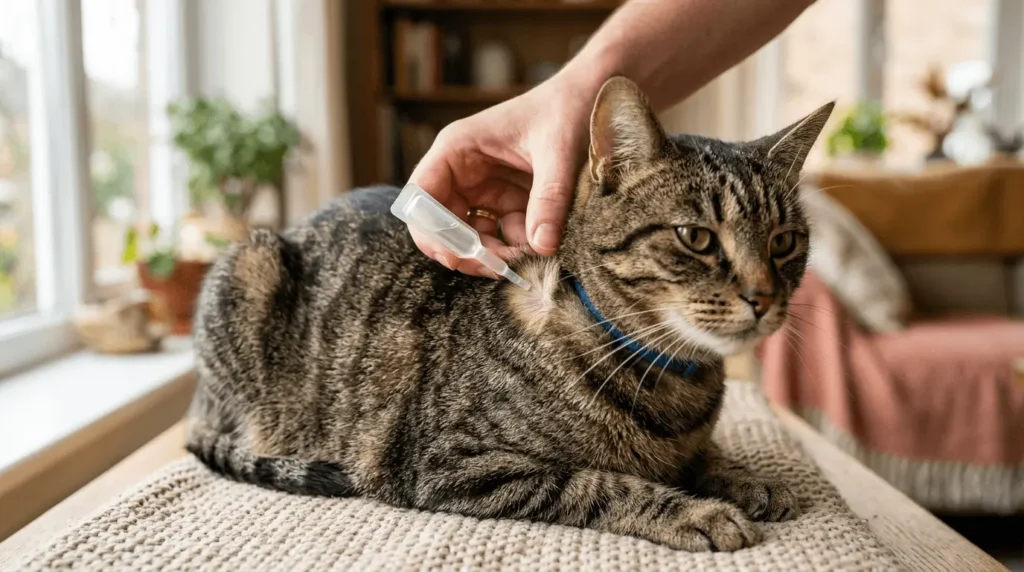
- Spot-on treatments
- Tablets
- Other veterinary-administered treatments
- Combination parasite treatments
The advantage isn’t simply that a product is “prescription”. Your vet can consider your cat’s overall health, lifestyle and other medicines before recommending a suitable treatment.
Some prescription products also protect against more than fleas, which can be convenient where your cat needs broader parasite control.
Best Flea Treatment for Cats Without a Vet Prescription UK
If you’re specifically looking for the best flea treatment for cats without a vet prescription UK, there are legitimate non-prescription choices, but it’s important to understand the different categories.
Some products are available as NFA-VPS medicines. These don’t require a prescription but must be supplied through an appropriate outlet with advice from a suitably qualified person. Other products fall into the AVM-GSL category and can be sold more generally. The UK’s Veterinary Medicines Directorate (VMD) maintains the official Product Information Database for authorised veterinary medicines.
For example, the current VMD database lists several cat flea products containing fipronil in different supply categories, including some AVM-GSL and NFA-VPS products.
The important point is not to choose a product simply because it is cheap, easy to find or labelled “natural”. Check that it is authorised for cats and follow the directions exactly.
Read also: Cat Care Guide
Best Flea Treatment for Cats Over the Counter: What Should You Look For?
Walking into a supermarket or pet shop and seeing shelves of flea products can be confusing. A sensible checklist can make the decision easier.
Check the Active Ingredient
Don’t judge a flea treatment by its packaging alone. Look at the active ingredients and make sure the product is specifically authorised for cats.
Fipronil, for example, is used in a number of authorised cat flea products in the UK. Some products combine fipronil with another ingredient designed to affect flea development.
Different active ingredients work in different ways, and availability and authorisation can change. If you’re unsure about a product, ask a vet, pharmacist or suitably qualified person for advice.
Check Your Cat’s Weight and Age
Never guess the dose.
Flea treatments are often available in different strengths for different body weights. Using the wrong product or strength can put your cat at risk.
Extra care is needed with:
- Young kittens
- Elderly cats
- Pregnant or nursing cats
- Cats with existing health problems
- Cats taking other medicines
- Cats that have previously reacted to parasite treatments
Always read the current product information before applying a treatment.
Best Flea Treatment for Cats Without a Vet Prescription: Is It Safe?
Yes, some non-prescription flea treatments are authorised for cats in the UK. But “available without a prescription” doesn’t mean “suitable for every cat”.
The VMD database currently includes authorised flea medicines for cats across different supply categories. For example, some fipronil spot-on products are listed as AVM-GSL, while others are NFA-VPS.
PDSA recommends an NFA-VPS product if a prescription product from your vet isn’t possible, while noting that some general off-the-shelf products may contain less effective ingredients.
So if you’re shopping for the best flea treatment for cats non prescription, focus on authorisation, the active ingredient, correct dosing and advice—not simply the price.
Buy From a Reputable UK Seller
If you’re purchasing online, be cautious about unfamiliar websites and products.
PDSA advises owners to use websites inspected by the VMD and notes that these sites display a VMD logo.
Be particularly wary of products that:
- Don’t clearly identify the active ingredient
- Don’t state that they are for cats
- Have unclear dosage instructions
- Come without proper product information
- Make dramatic claims without evidence
- Are sold by an unfamiliar website with questionable details
The Most Important Safety Rule: Never Use Dog Flea Treatment on a Cat
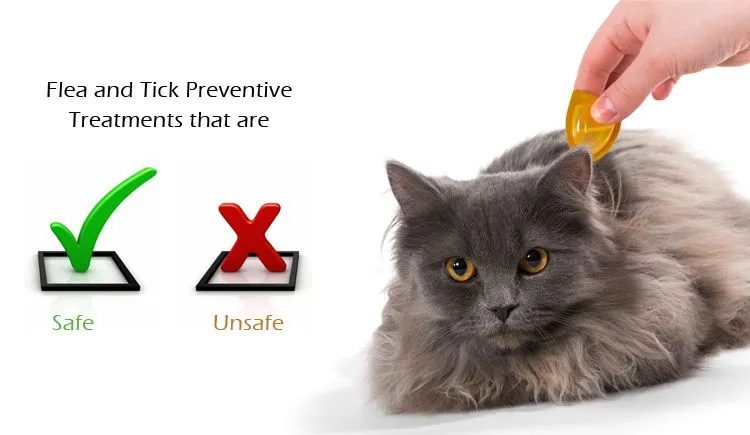
This deserves its own section because the mistake can be extremely dangerous.
Some dog flea treatments contain permethrin, an insecticide that is highly toxic to cats. Cats cannot process permethrin in the same way as dogs, and exposure can cause serious neurological signs, including twitching, tremors and seizures.
Never use a dog flea treatment on your cat, even if you think a smaller amount will be safe.
If a cat has accidentally been exposed to a dog flea product containing permethrin, contact a vet immediately. PDSA advises washing the product off with warm water and diluted washing-up liquid if possible while contacting a vet straight away.
Also be careful when treating dogs in a multi-pet household. Cats can potentially come into contact with freshly applied dog treatments by grooming or close contact.
Treat the House as Well as the Cat
One of the biggest reasons flea problems seem to “come back” is that the flea life cycle isn’t confined to your pet.
Eggs, larvae and pupae can be present in carpets, bedding and soft furnishings. Cats Protection explains that flea pupae can remain dormant in the environment for months, which makes environmental control an important part of dealing with an infestation.
Step-by-Step Flea Control at Home
If your cat has fleas, take a whole-house approach:
- Treat the cat with an appropriate cat flea treatment.
- Treat other cats, dogs and rabbits in the household with species-appropriate products.
- Wash pet bedding according to the care instructions.
- Vacuum carpets, furniture, cracks and other areas where your pets spend time.
- Consider an appropriate household flea treatment for carpets and furnishings.
- Keep pets away from treated areas as instructed on the product label.
- Continue cleaning and monitoring, because new adult fleas can emerge from previously developed stages.
PDSA recommends treating pets and the home together, while Blue Cross also recommends thorough vacuuming, washing bedding and using a suitable household flea spray according to its instructions.
Don’t Put Household Flea Spray on Your Cat
Household flea sprays are designed for the environment, not for direct application to animals.
Never spray a household flea product directly onto your cat. Follow the manufacturer’s instructions about removing pets from the area, ventilation and when it is safe for them to return.
Common Flea Treatment Mistakes to Avoid
Even a good flea treatment won’t work properly if it’s used incorrectly.
Avoid these common mistakes:
Using a dog product on a cat: This is potentially life-threatening, particularly with permethrin-containing products.
Treating only the cat: Flea eggs and immature stages can remain in your home.
Mixing products without advice: Using multiple flea products together can increase the risk of adverse effects.
Guessing the dose: Use the product intended for your cat’s weight and age.
Stopping too soon: Flea infestations can take time to bring under control because of the life cycle in the environment.
Ignoring other pets: Untreated pets can contribute to continued infestation.
Relying solely on home remedies: A flea comb and cleaning can help, but they shouldn’t replace an effective flea-control programme when an infestation is established.
Best Flea Treatment for Cats Recommended by Vets
When people search for the best flea treatment for cats recommended by vets, they are usually looking for one product name. The more useful answer is that vets choose treatments according to the individual cat.
Veterinary advice is particularly valuable if:
- Your cat is a kitten
- Your cat is pregnant or nursing
- Your cat has another medical condition
- Your cat takes regular medication
- Fleas keep returning despite treatment
- Your cat has severe itching or skin damage
- You have several pets
- You’re unsure which product is safe
Cats Protection advises owners to speak to their vet about the best flea treatment for their cat, and notes that some off-the-shelf products may not provide effective prevention.
A vet can also advise whether your cat needs protection against other parasites and how frequently treatment should be given.
What About Indoor Cats?
An indoor lifestyle lowers some risks, but it doesn’t make fleas impossible.
Fleas can enter a home on people, other animals and belongings. Cats Protection specifically notes that indoor cats can still encounter fleas and recommends discussing appropriate preventative treatment with a vet.
Your cat doesn’t need to be an adventurous garden explorer to encounter a flea. Sometimes the culprit is simply an unexpected passenger arriving through the front door.
Read also: Indoor Cat Care Guide
Final Thoughts
Finding the best flea treatment for cats isn’t simply about picking the strongest-looking product from a pet-shop shelf. The safest choice is one that is authorised for cats, suitable for your pet’s age and weight, and appropriate for their individual circumstances.
For many UK households, veterinary advice is the best starting point, particularly when fleas are persistent or your cat has other health needs. If you choose a non-prescription option, check its authorisation and instructions carefully.
And remember the golden rule: never use a dog flea treatment on a cat. Treat the pet, tackle the home, and follow the product instructions closely. A little care at the start can save both you and your cat a great deal of scratching later.
Key takeaways
- * The **best flea treatment for cats** depends on your cat’s age, weight, health, lifestyle and existing flea problem.
- * Veterinary-recommended treatments are often the best choice, especially for kittens, elderly cats or cats with other health concerns.
- * There are **non-prescription flea treatments for cats in the UK**, but always check that the product is authorised for cats and suitable for their weight and age.
- * **Never use a dog flea treatment on a cat.** Products containing permethrin can be highly toxic and potentially life-threatening to cats.
- * Treating the cat alone may not be enough. Flea eggs and immature stages can remain in carpets, bedding and soft furnishings.
- * Vacuum regularly and wash pet bedding to help break the flea life cycle in your home.
- * Avoid mixing flea treatments unless your vet or a suitably qualified medicines adviser tells you it is safe.
- * Indoor cats can still get fleas, so their lifestyle does not automatically make them flea-free.
- * If fleas keep returning, or your cat develops severe itching, sores, hair loss or other concerning symptoms, speak to your vet.
- * When choosing an **over-the-counter flea treatment for cats**, focus on safety, authorisation and correct use rather than simply choosing the cheapest product.
Frequently asked questions
The best treatment depends on your cat's age, weight, health, lifestyle and whether they already have fleas. Veterinary-recommended products are generally preferred, but there are also authorised non-prescription options in the UK. Ask your vet or an appropriately qualified medicines adviser if you're unsure.
The UK has authorised NFA-VPS and AVM-GSL flea medicines that can be obtained without a veterinary prescription. The right choice depends on the cat and product. Check the active ingredient, species, age and weight requirements rather than choosing based purely on price.
No. Some dog flea treatments contain permethrin, which is extremely poisonous to cats. Never transfer a dog product to a cat or try to calculate a smaller dose yourself.
Yes. Treating the cat alone may not eliminate an infestation because flea eggs and immature stages can remain in carpets, bedding and soft furnishings. Cleaning and appropriate environmental treatment are important parts of flea control.
Yes. Fleas can enter homes on people, clothing, other pets and belongings. Indoor cats can therefore still be exposed, although their lifestyle may affect their overall risk.
Contact your vet if your cat has severe itching, skin sores, hair loss, appears unwell, is very young, has another health condition, or continues to have fleas despite correctly using treatment. Seek urgent veterinary advice if your cat has been exposed to a dog flea product containing permethrin.