

Why Do Cats Knead? The Science Behind This Curious Habit
Kneading — that rhythmic, paws-alternating press many cats do on blankets, cushions, or you — is one of the most-asked-about cat behaviours, and one of the easiest to explain. If you’ve ever had a cat settle onto your lap and start rhythmically pushing its paws into you, alternating left and right, sometimes with claws flexing in and out, you’ve witnessed one of the most endearing (and occasionally puzzling) quirks of feline behaviour. Here’s what’s really going on.
A Kittenhood Instinct
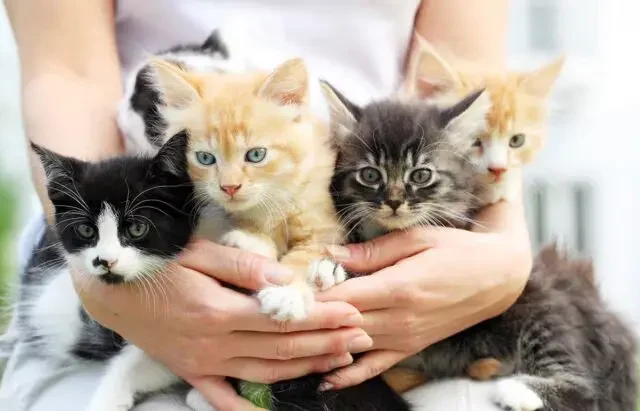
The roots of kneading go all the way back to a cat’s earliest days of life. Kittens knead against their mother while nursing to encourage milk flow. The pressing motion stimulates the mammary glands, helping milk let down more easily. It’s an instinctive, almost reflexive action — one that every kitten performs without being taught, hardwired in from birth as part of the nursing process.
Many cats simply never grow out of the motion, and it resurfaces as a comfort behaviour into adulthood. Long after weaning, long after leaving their mother entirely, the physical motion sticks around, repurposed for a different, though related, emotional need.
Why It Continues Into Adulthood
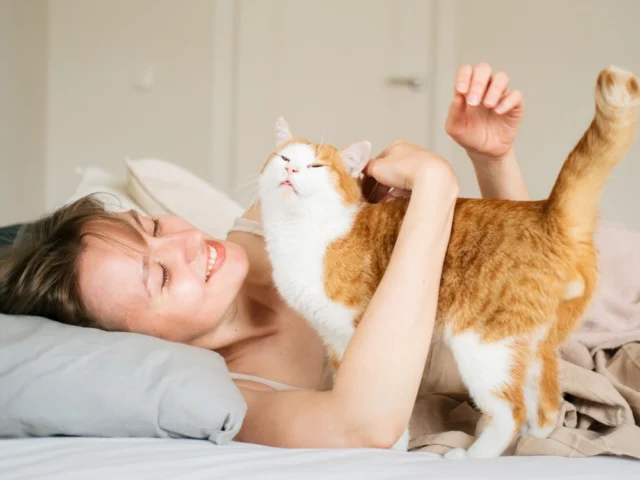
Kneading is strongly associated with contentment and security. It’s rarely seen in moments of stress or alertness — instead, it tends to show up when a cat feels safe, relaxed, and at ease. Watch closely and you’ll usually notice the behaviour is part of a broader package: kneading is often accompanied by purring, half-closed eyes, and settling in for a nap.
In many ways, kneading functions like a self-soothing ritual, not unlike a person absentmindedly twirling their hair or tapping their fingers when relaxed. Some behaviourists also suggest it may be tied to scent-marking, since cats have scent glands in their paws — meaning a kneading cat could be leaving a subtle signature on their favourite napping spot, reinforcing it as “theirs” and safe.
When Kneading Includes Claws
Kneading isn’t always just the gentle press it might seem from a distance. Some cats knead with claws extended, which can be uncomfortable — or even a little painful — on bare skin, especially if you’re wearing shorts or a t-shirt and your cat decides your lap makes an ideal kneading surface.
The good news is this quirk has a simple, low-effort solution. Placing a blanket over your lap is a simple, cat-friendly fix. It gives your cat a soft surface to dig their claws into without any discomfort on your end, letting them carry on with their instinctive comfort ritual uninterrupted.
The Takeaway
Kneading is a small window into a cat’s inner world: part instinct, part comfort, and part contentment on display. Far from being an odd quirk to worry about, it’s usually a sign your cat feels right at home with you — claws and all.
Key takeaways
- Kneading starts in kittenhood. Kittens press their paws against their mother while nursing to stimulate milk flow — an instinctive motion tied to feeding.
- The habit often carries into adulthood as a self-soothing, comfort-driven behaviour, even though it no longer serves a nursing purpose.
- It signals contentment and security, usually appearing alongside purring, relaxed body language, and pre-nap settling.
- Claws can come out during kneading, which may be uncomfortable on bare skin — an easy fix is placing a blanket over your lap.
- It's completely normal and healthy. There's no need to discourage kneading; it's simply part of how cats express comfort and ease.
Frequently asked questions
This is usually still affection, not aggression. Some cats give a gentle "love bite" once they're fully relaxed and worked up into a purring, kneading state — it's an extension of the same contentment response, not a sign of irritation.
Most cats knead to some degree, though the intensity and frequency vary a lot by individual. Some cats knead daily before naps, others do it rarely or only with specific soft objects like a favourite blanket.
Not specifically — kneading shows up in cats regardless of background. It's sometimes suggested that cats separated from their mothers too early knead more, since the behaviour may serve as extra self-soothing, but this isn't firmly established and plenty of confidently raised cats knead just as much.
There's no need to. Kneading is a normal, healthy behaviour tied to comfort and security. The only adjustment worth making is protecting your skin or furniture if your cat kneads with claws out — a blanket or trimmed nails handles that easily.
This is closely related to nest-making instincts. In the wild, cats would press down grass or bedding to create a comfortable, secure spot before settling — domestic cats often retain this "flattening" motion even on a soft bed or cushion where it serves no practical purpose anymore.