
Shih Tzu Puppy Care: A Practical Guide for New Owners
Bringing home a Shih Tzu puppy is exciting, but those tiny paws come with a surprising amount of responsibility. From feeding and grooming to toilet training and keeping that little flat face comfortable, good Shih Tzu puppy care starts from day one. Shih Tzus are affectionate companion dogs, but their long coat, short facial structure and small size mean they need some breed-specific attention. They also benefit from gentle, reward-based training and plenty of positive experiences while they are young. This Shih Tzu puppy care guide covers the essentials for new owners, including what to expect after birth, caring for a one-month-old puppy, housebreaking, grooming, feeding, socialisation and important health considerations for UK households.
Understanding Shih Tzu Puppy Care
Shih Tzus were bred primarily as companion dogs, and many enjoy being close to their people. They can adapt well to flats and houses, provided they have enough opportunity for play, training, exercise and companionship.
Their small size can make them look almost toy-like, but they are still proper dogs with normal canine needs.
A young Shih Tzu needs:
- A complete puppy diet suitable for its age
- Fresh water
- A warm, safe sleeping area
- Gentle exercise and play
- Regular grooming
- Positive training
- Appropriate socialisation
- Routine veterinary care
- Plenty of rest
The trick is not trying to do everything at once. Puppies sleep a lot, have tiny bladders and are still learning how the world works. A simple routine usually makes life easier for both of you.
Shih Tzu Puppy Care After Birth
If you are caring for a Shih Tzu puppy immediately after birth, this is a very different situation from caring for an eight-week-old puppy.
Newborn puppies are particularly vulnerable and depend heavily on their mother for warmth, nutrition and care.
Keep newborn puppies warm
Very young puppies cannot regulate their body temperature effectively. They should normally remain with their mother and littermates in a suitably warm, clean environment.
A newborn puppy that feels cold, is unusually weak or is struggling to feed needs prompt veterinary attention.
Do not try to improvise intensive newborn care without professional advice.
Make sure puppies are feeding properly
A healthy newborn puppy should nurse regularly and gain weight.
If a puppy repeatedly struggles to latch, is pushed away by the mother, appears weak or isn’t gaining weight, contact your vet promptly.
Bottle or syringe feeding should not be improvised. A vet can advise whether a commercial puppy milk replacer and a specific feeding plan are necessary.
Weigh young puppies regularly
Regular weighing can help identify problems before they become obvious.
Keep a simple record of:
- Weight
- Feeding
- Behaviour
- Toileting
- Any unusual symptoms
If a newborn puppy loses weight, becomes very quiet or stops feeding, don’t wait to see if things improve.
When should a Shih Tzu puppy leave its mother?
For puppies being bought in the UK, PDSA advises that puppies should not leave their mother before eight weeks because early separation can affect their social development and welfare.
This is one reason responsible breeding and early puppy care matter so much.
Read also: Puppy Care Guide
Caring for a One-Month-Old Shih Tzu Puppy
A one-month-old Shih Tzu is still very young. At around four weeks, puppies are moving into an important transition period.
They are becoming more mobile, starting to explore their surroundings and beginning the weaning process.
Feeding at one month
At this age, puppies may begin moving from their mother’s milk towards soft puppy food, but the transition should be gradual.
If the puppy is still with its mother, she will continue to provide important nutrition. If you are caring for an orphaned puppy, speak to your vet about an appropriate milk-replacer and weaning plan.
Don’t suddenly switch a young puppy to ordinary adult dog food.
Give plenty of sleep
Young puppies need a lot of rest.
It can be tempting to play with a tiny Shih Tzu every time they wake up, but growing puppies need quiet periods too.
Provide a comfortable sleeping area away from excessive noise and household traffic.
Start gentle handling
Short, positive handling sessions can help a puppy become comfortable with normal household experiences.
Gently introduce:
- Being touched around the paws
- Looking at the ears
- Gentle face handling
- Being brushed
- Brief collar or harness handling
- Household sounds at a sensible volume
Keep these experiences calm and rewarding.
You don’t need to turn every interaction into a training session.
Shih Tzu Puppy Care Housebreaking: Start With a Routine
Housebreaking can be one of the biggest challenges for new puppy owners.
A Shih Tzu puppy has a small bladder, so accidents are normal. The goal is to create a predictable routine rather than expecting perfection immediately.
Take your puppy out regularly
Give your puppy opportunities to toilet:
- After waking up
- After eating
- After drinking
- After playing
- Before bedtime
- Whenever they show signs of needing to go
Take them to the same suitable toilet area when possible.
When they get it right, reward them immediately with calm praise and a small appropriate treat.
Watch for toilet signals
Your puppy may:
- Sniff the floor
- Walk in circles
- Wander away from you
- Become restless
- Head towards a previous toilet spot
If you notice these signs, take them outside promptly.
Don’t punish accidents
Finding a puddle on the carpet can be frustrating, particularly when it happens for the third time before breakfast.
Punishing the puppy won’t teach the right lesson. Clean the area thoroughly and focus on preventing the next accident.
If accidents are unusually frequent or your puppy suddenly starts toileting differently, speak to your vet.
Make housebreaking easier
Consistency is your friend.
Keep meals, sleep and toilet breaks reasonably predictable. Supervise your puppy closely when they are awake and restrict access to areas of the house where accidents are difficult to spot.
Puppy pads can be useful in some situations, but if your long-term goal is outdoor toileting, gradually teach the puppy where you want them to go.
Grooming Your Shih Tzu Puppy
This is one area where Shih Tzu owners need to get organised early.
Their beautiful coat needs regular maintenance, and getting a puppy used to grooming from a young age can make future grooming much easier. PDSA recommends daily brushing for Shih Tzus and notes that many pet owners choose to keep their coat clipped.
Start brushing gently
Don’t wait until the coat becomes tangled before introducing a brush.
Begin with very short sessions:
- Let the puppy investigate the brush.
- Give a treat.
- Gently brush a small area.
- Stop before the puppy becomes fed up.
- Gradually increase the time.
The aim is to make grooming feel ordinary rather than something to escape from.
Pay attention to the face
Shih Tzus have prominent eyes and facial hair that can collect food and discharge.
Check the area around the eyes and mouth regularly. PDSA recommends keeping the facial area clean and trimming hair around the mouth and nose as needed.
If you notice redness, swelling, persistent discharge, squinting or obvious discomfort, contact your vet rather than simply treating it as a grooming problem.
Introduce professional grooming early
If you plan to use a professional groomer, find one who is comfortable handling puppies and introduce your Shih Tzu gradually.
Early positive experiences can make future clipping, bathing and nail care much less stressful.
Read also: Dog Grooming Guide
Feeding a Shih Tzu Puppy
Choose a complete puppy food designed for the appropriate life stage.
Puppies have different nutritional requirements from adult dogs, so avoid making a homemade diet or adding supplements unless your vet recommends them.
PDSA advises feeding a complete, balanced commercial dog food and adjusting the amount according to the individual dog’s needs. Treats should also be counted as part of the overall diet.
Keep meals measured
Small breeds can be easy to overfeed, especially when every tiny face looks irresistibly hungry.
Follow the feeding guidance on the food and ask your vet if you’re unsure about the correct amount.
Keep fresh drinking water available at all times.
Don’t rely on treats
Training treats can be useful, but they shouldn’t replace a balanced diet.
You can also use tiny portions of the puppy’s normal food as rewards during training.
Exercise and Play for a Shih Tzu Puppy
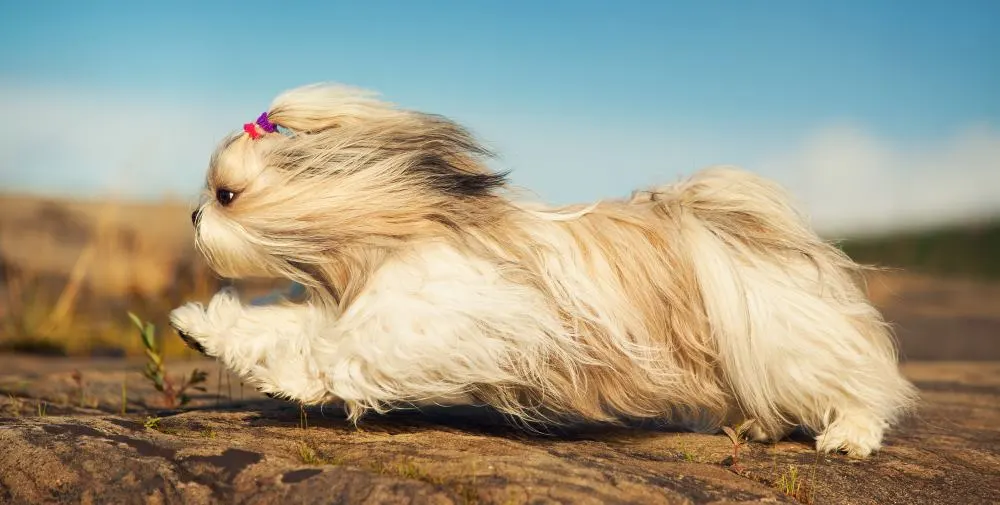
Shih Tzu puppies need exercise, but young puppies shouldn’t be pushed into long or exhausting sessions.
Short play sessions, gentle exploration and age-appropriate training are usually more useful than trying to tire a puppy out.
Because Shih Tzus are flat-faced dogs, owners also need to be particularly careful about overheating and breathing difficulties.
Keep play short and enjoyable
Good puppy activities include:
- Gentle games with suitable toys
- Short training sessions
- Sniffing games
- Food puzzles
- Exploring safe areas
- Calm interaction with people
Avoid forcing a puppy to keep exercising when they are tired.
Socialisation and Training
Early experiences can shape how confidently your puppy responds to people, dogs, sounds and new environments.
Socialisation doesn’t mean allowing everyone to pick up your puppy.
Instead, introduce new experiences gradually and make them positive.
Blue Cross recommends keeping early encounters pleasant, watching for signs that a puppy is becoming overwhelmed and giving them space when necessary.
Use reward-based training
Shih Tzus can respond well to positive, reward-based training.
Start with simple behaviours such as:
- Responding to their name
- Coming when called
- Sitting
- Waiting briefly
- Walking nicely on a lead
- Settling on a bed
- Leaving something alone
Keep sessions short. Several little sessions can be much more effective than one long lesson.
Read also: Puppy Training Guide
Shih Tzu Health: What Owners Should Watch
Shih Tzus can be wonderful companion dogs, but the breed has some health considerations that prospective owners should understand.
PDSA lists concerns including eye problems, dental crowding, BOAS, intervertebral disc disease and other inherited conditions.
Take breathing problems seriously
Shih Tzus are brachycephalic, meaning they have a shortened head shape.
BOAS, or Brachycephalic Obstructive Airway Syndrome, can cause breathing difficulties. PDSA specifically lists Shih Tzus among the flat-faced breeds that can be affected.
Don’t assume persistent noisy breathing is simply a normal feature of the breed.
If your puppy has difficulty breathing, struggles to recover after gentle activity, collapses, develops blue or very pale gums, or shows sudden breathing problems, seek urgent veterinary advice.
Be careful in warm weather
Heat is particularly important for flat-faced dogs.
PDSA warns that brachycephalic dogs have a higher risk of heatstroke because their shortened airways can make cooling themselves more difficult.
In warm weather:
- Avoid strenuous exercise.
- Choose cooler times for walks.
- Keep your puppy somewhere cool and well ventilated.
- Never leave a dog in a parked car.
- Watch closely for signs of overheating.
Veterinary Care, Vaccinations and Microchipping in the UK
Your puppy should have a veterinary health check and follow the vaccination schedule recommended by your vet.
PDSA says puppy vaccination programmes generally start from around eight weeks, although your vet will advise the appropriate schedule for your puppy.
PDSA also notes that dogs in the UK need to be microchipped, and routine preventive care includes vaccinations and parasite control.
Keep your puppy’s paperwork together, including:
- Vaccination records
- Microchip information
- Worming information
- Insurance documents
- Vet details
- Breeder or rescue paperwork
If you are buying rather than adopting, research the breeder carefully. PDSA recommends seeing puppies with their mother, checking health testing and avoiding puppies offered unusually early or in questionable circumstances.
Common Shih Tzu Puppy Care Mistakes to Avoid
Even well-meaning owners can make puppy care harder than it needs to be.
Overfeeding
Those puppy eyes are powerful. Stick to measured meals rather than feeding every time your puppy asks.
Ignoring grooming until the coat is tangled
Teach your puppy that brushing is normal from an early age.
Treating noisy breathing as completely normal
Flat-faced dogs can have genuine airway problems. Persistent or concerning breathing should be discussed with a vet.
Expecting instant house training
Toilet training takes time and consistency.
Overdoing exercise
A tired puppy isn’t necessarily a well-exercised puppy. Puppies need sleep, mental stimulation and appropriate physical activity.
Using punishment-based training
Fear and intimidation can damage trust. Reward the behaviours you want and manage the environment to prevent unwanted ones.
MSkipping socialisation
A puppy doesn’t need to meet every dog in the neighbourhood. It does need calm, positive exposure to a variety of appropriate people, places, sounds and experiences.
Important Considerations for UK Pet Owners
UK owners should think beyond food and toys when preparing for a Shih Tzu puppy.
Before bringing your puppy home, prepare:
- A comfortable bed or safe sleeping area
- Food and water bowls
- Appropriate puppy food
- A suitable harness and lead
- ID tag
- Grooming brush and comb
- Puppy-safe toys
- Dog toothbrush and toothpaste
- Cleaning supplies
- Car restraint
- Puppy-proofed rooms
PDSA’s puppy checklist also recommends essentials such as a bed or crate, bowls, puppy food, collar and tag, lead, car restraint, toys, grooming equipment and dental-care supplies. Think about insurance early too. Shih Tzus can have breed-related health concerns, and veterinary treatment can become expensive. Most importantly, choose a vet you can contact easily and ask questions whenever something about your puppy’s health doesn’t look right.
Final Thoughts
Good Shih Tzu puppy care is mostly about getting the basics right and building good habits early. Feed an appropriate complete puppy diet, establish a gentle toilet routine, introduce grooming gradually, use reward-based training and give your puppy plenty of sleep. Pay particular attention to breathing, heat, eyes, teeth and overall behaviour because Shih Tzus have some breed-specific health considerations. You don’t need to be a perfect puppy owner. You just need a sensible routine, patience and the confidence to ask your vet when something doesn’t seem right. Those small daily habits can make a huge difference as your fluffy little companion grows into a happy adult dog.
Frequently asked questions
A one-month-old puppy needs warmth, appropriate nutrition, plenty of sleep, gentle handling and close monitoring. If the puppy is orphaned or isn't feeding properly, speak to a vet for a specific feeding and care plan.
There isn't a fixed timetable. Some puppies progress quickly, while others need considerably longer. Consistent toilet breaks, supervision and immediate rewards for going in the correct place can help.
Get your puppy used to gentle grooming early. Shih Tzus have high-maintenance coats, and PDSA recommends daily brushing to help prevent knots and tangles.
They can have age-appropriate activity, but outdoor walks should follow your vet's advice about vaccinations and infectious-disease risk. Start with short, gentle activities rather than demanding exercise.
They can learn well with consistent, reward-based training. Start with simple behaviours and keep sessions short and positive.
Contact your vet if your puppy isn't eating, becomes unusually weak or sleepy, has repeated vomiting or diarrhoea, develops persistent coughing or breathing problems, shows significant pain, or has any sudden change that concerns you. For breathing difficulties, particularly in a flat-faced breed, seek veterinary advice promptly.