
Cat Tree Guide: How to Choose the Right One for Your Cat
A good cat tree can become much more than a fluffy piece of furniture taking up space in the corner of your living room. For many cats, it provides somewhere to climb, scratch, stretch, nap and keep an eye on the household from a safe height. But choosing the right one is trickier than it looks.
A quick search brings up everything from compact scratching posts to enormous multi-level cat towers with hammocks, tunnels and platforms. Then there is the question of price. Is a £30 cat tree enough? Do large cats need something substantially sturdier? And how much should you realistically spend on a cat tree house in the UK?
This guide covers the practical details, including size, stability, materials, features, cat tree price and what to look for if you have a particularly large or energetic feline.
What Is a Cat Tree?
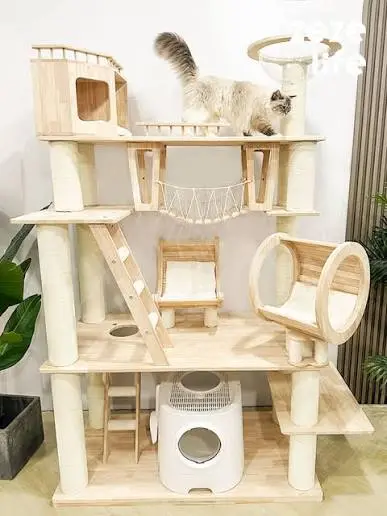
A cat tree is a purpose-built piece of furniture designed to give cats opportunities to climb, scratch, rest and play.
Depending on the design, a cat tree might include:
- Scratching posts
- Raised platforms
- Enclosed sleeping areas
- Hammocks
- Tunnels
- Ladders or ramps
- Hanging toys
- Perches
- Multiple levels
The idea is fairly simple: cats naturally enjoy using vertical space. A raised perch can give them somewhere to rest while observing what is happening around them.
For indoor cats especially, a well-positioned cat tree can add variety to their environment without requiring you to turn the entire house into a feline climbing gym.
Read also: Indoor Cat Enrichment Guide
Why Do Cats Like Cat Trees?
Cats have different personalities, so not every cat will use every feature. One may immediately launch themselves onto the highest platform while another carefully investigates the box for three days before deciding it is acceptable.
Height provides a useful vantage point
Many cats enjoy elevated resting places. From a high platform, a cat can watch people, other pets and household activity without being in the middle of it.
A raised bed may also provide a quiet retreat for a cat that prefers some distance from busy family life.
Scratching serves a natural purpose
Scratching is normal feline behaviour. Cats scratch to maintain their claws, stretch their bodies and leave scent and visual marks.
A cat tree with sturdy scratching posts can therefore give your cat an appropriate place to scratch instead of the side of your sofa.
The key word is sturdy. A scratching post that wobbles dramatically every time your cat uses it is unlikely to be very appealing.
It creates opportunities for movement
Jumping between levels, climbing and stretching can add physical activity to an indoor cat’s day.
A cat tree should not be treated as a replacement for interactive play, but it can form part of a more interesting home environment.
How to Choose the Right Cat Tree
The best cat tree is not necessarily the biggest or most expensive one. It is the one that suits your cat and your home.
Before buying, think about your cat’s:
- Weight
- Age
- Mobility
- Personality
- Climbing ability
- Scratching habits
- Sleeping preferences
- Confidence around other pets
Then consider where you will put it.
Measure your available space
Take measurements before ordering.
Check:
- Overall height
- Base width
- Depth
- Platform dimensions
- Clearance around the furniture
- Distance from doors and walkways
A giant tower may look fantastic online but become rather less fantastic when you discover that it blocks the cupboard door.
Consider ceiling height
Tall cat trees need appropriate clearance. Avoid placing a tall structure where it could interfere with ceiling fixtures, shelves or other furniture.
If the model is designed to be secured to a wall or ceiling, follow the manufacturer’s installation instructions carefully.
Cat Tree for Large Cats: What Should You Look For?
If you own a Maine Coon, Ragdoll, Norwegian Forest Cat or simply a particularly hefty moggy, choosing a cat tree for large cats requires extra care.
Large cats can put considerable force through the structure when jumping, landing and scratching.
Prioritise stability
A wide, heavy base is generally preferable to a narrow structure for a large cat.
Look for:
- A broad base
- Thick support posts
- Secure platforms
- Strong fixings
- Appropriate weight limits
- Minimal wobbling during normal use
If the manufacturer’s stated weight capacity is below your cat’s weight, choose another model.
Check platform size
A large cat needs enough room to sit and lie down comfortably.
A platform that looks generous in a product photograph may feel surprisingly small underneath an adult Maine Coon.
Pay particular attention to the dimensions rather than relying on phrases such as “large” or “XL”.
Look at the scratching posts
Large cats often benefit from substantial scratching posts that allow them to stretch fully.
A short post may technically provide somewhere to scratch, but it may not give a large cat the satisfying full-body stretch they are looking for.
Cat Tree Materials: What Makes a Good One?
Cat trees commonly combine materials such as carpet, sisal rope, plywood, MDF or particleboard.
The material itself matters less than the overall construction.
Sisal scratching posts
Sisal is commonly used for scratching surfaces because it provides a textured material cats can dig their claws into.
A good scratching section should be securely attached and tall enough for the intended cat.
Soft coverings
Fleece, carpet and similar coverings can make sleeping platforms more comfortable.
However, inspect the covering regularly. If your cat has managed to turn one corner into a pile of loose threads, repair or replace the affected component where appropriate.
Wooden structure
The internal frame needs to be strong enough for the intended weight and activity level.
For a large or energetic cat, flimsy construction is a false economy. Saving money on the purchase price is not much use if the tree quickly becomes unstable.
Cat Tree Price: How Much Should You Spend?
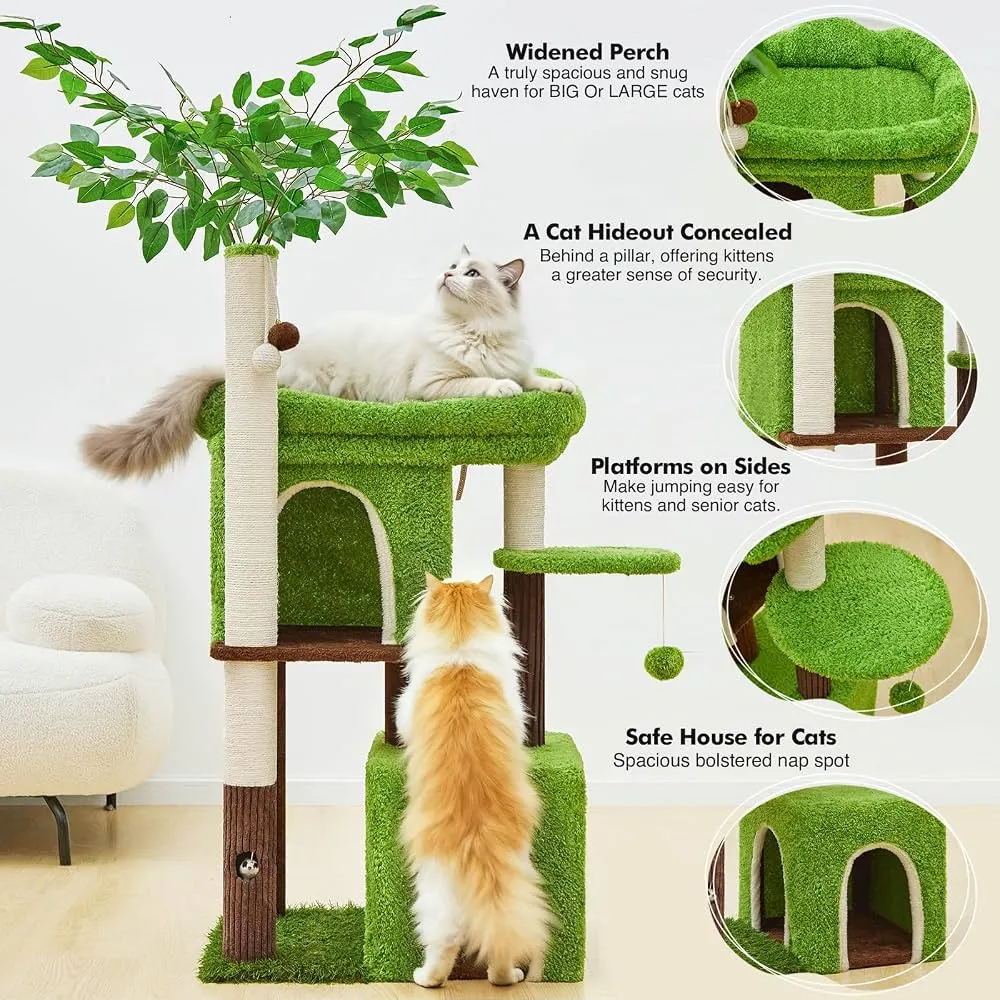
There is no single “correct” cat tree price in the UK.
Small, basic scratching towers can be relatively inexpensive, while large multi-level structures can cost considerably more. Premium models using heavier materials, larger platforms or more elaborate designs can cost significantly more again.
Rather than setting a budget based solely on the cheapest available option, think about value.
A £40 cat tree that your cat ignores is not necessarily better value than a £100 model they use every day.
At the same time, spending £200 does not automatically guarantee that your cat will love it.
What affects cat tree price?
The cost is usually influenced by factors such as:
- Overall size
- Number of platforms
- Construction quality
- Base size
- Materials
- Number of scratching posts
- Enclosed beds or houses
- Brand
- Design
- Weight capacity
- Installation or mounting features
If you have a large cat, spending a little more on a properly stable structure can make more sense than buying a cheap tower that is too small.
Cat Tree House Price in the UK
A cat tree house usually refers to a tree that includes one or more enclosed cubby-style areas where a cat can hide or sleep.
The price varies considerably depending on size and construction.
A simple cat tree with one small house can be fairly affordable, while a large tower containing several platforms, scratching areas, beds and enclosed spaces can cost much more.
Don’t pay extra simply because a model has an impressive list of features.
Ask whether your cat will actually use them.
For example, if your cat loves hiding underneath the bed but rarely climbs, an enclosed lower-level house may be more valuable than three tiny top platforms.
Step-by-Step: Setting Up a Cat Tree
Buying the tree is only half the job. Placement can make a surprising difference.
1. Choose a useful location
Many cats enjoy being able to see what is happening around them.
A location near a window can be attractive, provided the area is safe and the furniture does not interfere with secure window operation.
2. Make sure the floor is level
An uneven floor can make an otherwise decent tree wobble.
Place it on a stable, level surface.
3. Tighten every fixing
Follow the manufacturer’s assembly instructions and check screws, bolts and connections carefully.
4. Test the structure
Before allowing your cat to use it, gently test the platforms and scratching posts yourself.
It should not sway excessively under ordinary pressure.
5. Introduce it gradually
Some cats will climb aboard immediately.
Others will look at the new furniture suspiciously, walk away and return at 2am when nobody is watching.
You can encourage exploration with a favourite toy or a small amount of their usual food, but avoid forcing your cat onto the structure.
Common Cat Tree Mistakes to Avoid
Buying based on appearance alone
A beautifully photographed cat tree is not necessarily a practical one.
Check dimensions, construction and weight capacity before looking at the decorative details.
Choosing a narrow base for a heavy cat
Large cats need stability. A tall, narrow structure can be a poor choice if your cat is heavy or particularly enthusiastic when climbing.
Ignoring the scratching surface
If scratching is a major reason for buying the tree, make sure there is enough suitable scratching material.
Putting it somewhere your cat dislikes
You may love the idea of hiding the tree in a quiet corner.
Your cat may disagree.
If your cat prefers being near people or watching through a window, a forgotten corner may not be the best location.
Forgetting maintenance
Cat trees collect fur, dust and the occasional mystery crumb.
Vacuum soft areas regularly and inspect scratching posts, platforms and fixings for wear.
Replace damaged components where possible, or replace the entire structure if it is no longer safe.
Do Cats Really Need a Cat Tree?
No cat is legally required to own one, and plenty of cats live perfectly happy lives without a traditional tower.
However, a cat tree can be a useful form of environmental enrichment.
This is particularly relevant for indoor cats, kittens with lots of energy and cats that enjoy climbing.
Other forms of enrichment can include:
- Interactive toys
- Puzzle feeders
- Scratching boards
- Window perches
- Cardboard boxes
- Safe hiding places
- Regular play sessions
The aim is not to fill your house with cat furniture. It is to give your cat suitable opportunities to perform normal behaviours.
Read also: Best Indoor Cat Enrichment Ideas
How to Make a Cat Tree More Appealing
If your cat ignores their new tree, don’t immediately assume you bought the wrong one.
Try changing its surroundings.
You could:
- Place a favourite toy nearby
- Add familiar bedding
- Position it where your cat already likes to relax
- Use interactive play around the structure
- Put a safe perch near a window
- Give your cat time to investigate it independently
Avoid placing food directly on high platforms if there is a risk of falling or conflict with other pets.
And remember: cats have an extraordinary ability to reject a £100 tower and fall asleep inside the cardboard box it arrived in.
Important Considerations for UK Cat Owners
UK homes vary enormously, from compact flats to large houses, so space should be part of the buying decision.
If you live in a smaller property, a vertical cat tree can make use of upward space without taking over the entire floor.
For renters, consider whether the model requires drilling into walls or ceilings. If it does, check your tenancy agreement and obtain any necessary permission before installation.
Safety is also worth considering around children and other pets. A cat should have access to somewhere they can retreat without being cornered or disturbed.
If your cat has arthritis, reduced mobility or another health concern, a very tall tree with large jumps may not be appropriate. In those circumstances, a lower design with easier access may be more suitable. If you are unsure, ask your vet for advice.
Final Thoughts
A cat tree can be one of the most useful additions to a cat-friendly home, but bigger and more expensive does not automatically mean better.
Focus on what your cat actually needs: a stable base, suitable scratching surfaces, comfortable platforms and enough room to move safely. If you have a large breed, construction and platform size become especially important.
When comparing cat tree price or the price of a cat tree house in the UK, think about long-term value rather than simply choosing the cheapest or most elaborate model.
The winning design is the one that fits your home, suits your cat and survives their daily adventures. And if your cat chooses the box instead, at least you’ve got somewhere to store the cat tree.
Key takeaways
- ## Key Takeaways
- * A **cat tree** can provide cats with valuable opportunities to climb, scratch, play, stretch and rest.
- * The best cat tree depends on your cat's **size, weight, age, mobility, personality and climbing habits**.
- * For a **cat tree for large cats**, prioritise a wide stable base, strong construction, large platforms and sturdy scratching posts.
- * Don't choose a cat tree based on appearance alone. **Check dimensions and weight capacity** before buying.
- * **Cat tree prices in the UK vary widely**, so compare construction quality and features rather than simply choosing the cheapest option.
- * A **cat tree house** can be useful for cats that enjoy enclosed spaces, but extra features are only worthwhile if your cat will actually use them.
- * Sisal scratching posts can give cats an appropriate place to scratch while also allowing them to stretch.
- * Place the tree somewhere your cat is likely to enjoy, such as a location where they can **observe household activity or safely look out of a window**.
- * Always check fixings and stability during assembly, and **inspect the tree regularly for damage or loose parts**.
- * Indoor cats can particularly benefit from cat trees as part of a broader **environmental enrichment routine**.
- * Cats with mobility difficulties may need a **lower, easier-to-access design**; ask your vet if you are unsure what is suitable.
- * The best cat tree is not necessarily the biggest or most expensive—it is the one that is **safe, stable, appropriately sized and genuinely used by your cat**.
Frequently asked questions
Choose a model with a broad, stable base, strong construction, adequately sized platforms and a weight capacity suitable for your cat. Large scratching posts are also useful for cats that enjoy stretching while scratching.
Cat tree prices vary considerably. Small basic models can be relatively inexpensive, while large, sturdy multi-level towers can cost substantially more. Compare construction, dimensions and weight capacity rather than price alone.
It can be. A cat tree provides opportunities for climbing, scratching, resting and observing the home. It is particularly useful as part of a wider enrichment routine for indoor cats.
The size should match both your cat and your available space. Large breeds such as Maine Coons need larger platforms and sturdier construction than smaller cats. Always check the manufacturer's measurements and weight guidance.
A useful location is somewhere your cat can comfortably observe household activity. Near a window can work well for many cats, provided the location is safe and stable. Avoid blocking exits or placing the tree where it could be knocked over.
There is no universal lifespan. It depends on construction quality, how heavily it is used and how well it is maintained. Inspect it regularly for loose fixings, damaged platforms, unstable sections and worn scratching material.