
Bernese Mountain Dog: Size, Lifespan, Puppies and What Owners Should Know
A Bernese Mountain Dog is hard to miss. With a thick tri-coloured coat, soulful brown eyes and the sort of size that makes a normal sofa look surprisingly small, this Swiss breed has plenty of admirers in the UK. But behind that impressive appearance is a gentle, people-focused dog with some very specific needs.
If you are considering a Bernese Mountain Dog puppy, already own one, or simply want to know whether this breed would fit your household, there is more to consider than its beautiful coat. Bernese Mountain Dog size, exercise needs, grooming, health, temperament and relatively short Bernese Mountain Dog lifespan all deserve attention before bringing one home.
Here is a practical guide to what life with this remarkable breed is really like.
Understanding the Bernese Mountain Dog
The Bernese Mountain Dog, often affectionately called a “Berner”, originated in Switzerland. It was traditionally used as a farm dog, helping with tasks such as moving livestock and pulling carts.
That working background helps explain the breed’s combination of strength, intelligence and willingness to work alongside people. Modern Berners are more likely to spend their days walking through a British park than hauling farm equipment, but they still tend to enjoy having something interesting to do.
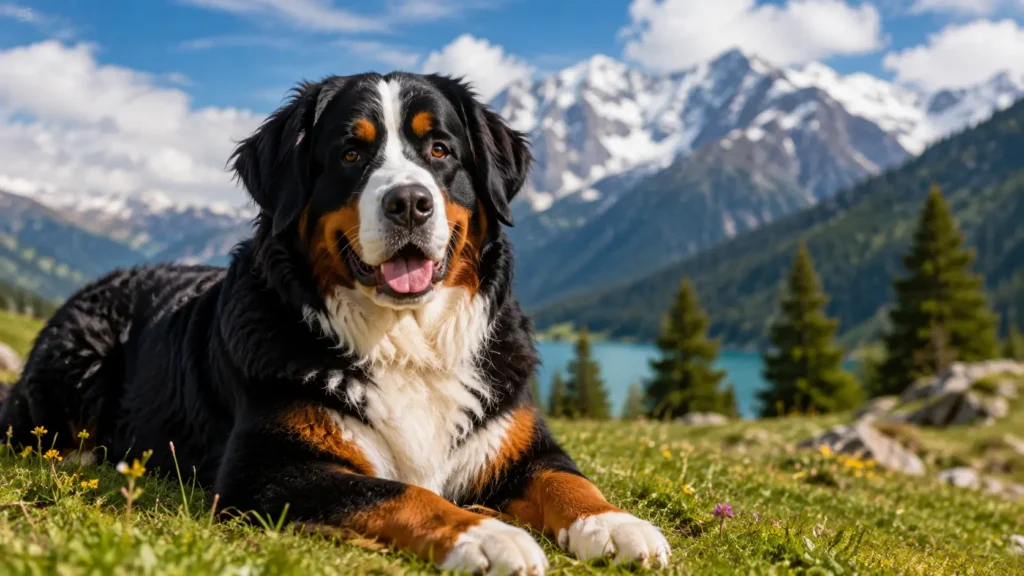
Their appearance is one of their defining features. The classic coat is predominantly black with rich rust-coloured markings and white areas on the face, chest, feet and sometimes the tail.
What is their temperament like?
Bernese Mountain Dogs are generally known for being affectionate, loyal and strongly attached to their families.
Many are friendly and patient, although individual personalities vary. Early socialisation is still important because a large dog that has not learned how to behave around people, dogs and unfamiliar situations can become difficult to manage.
They often enjoy being near their owners rather than spending long periods alone. This is worth considering if your household is empty for much of the day.
A Berner may be physically imposing, but many have a surprisingly soft personality. Some seem convinced they are lap dogs despite considerable evidence to the contrary.
Are Bernese Mountain Dogs good family dogs?
They can make excellent family companions when their needs are properly met.
A well-socialised Bernese may enjoy living with children, but supervision is essential. Their size alone means that an enthusiastic greeting or accidental bump can knock over a small child.
Families should also teach children to respect a dog’s space, particularly while the dog is eating, sleeping or resting.
They can also live with other pets, particularly when introductions are handled gradually and positively.
Read also: Dog Breeds Guide
Bernese Mountain Dog Size and Weight
One of the first questions prospective owners ask is how big a Bernese Mountain Dog actually becomes.
They are a large breed, and their adult size should be taken seriously when planning your home, transport and daily routine.
Adult height is generally around:
- Male: approximately 64–70 cm at the shoulder
- Female: approximately 58–66 cm at the shoulder
Adult Bernese Mountain Dog weight can vary according to sex, build and individual dog. A healthy adult may commonly fall somewhere around 35–55 kg.
The important point is that weight should not be judged by appearance alone. A large-framed dog can naturally weigh more than another Berner, while excess body fat can put unnecessary stress on the joints.
How big is a Bernese Mountain Dog puppy?
A Bernese Mountain Dog puppy grows considerably during its first year and can look comically oversized at different stages.
Growth should be steady rather than deliberately accelerated. Overfeeding a large-breed puppy in an attempt to make it “big” can contribute to excessive growth and put additional strain on developing bones and joints.
Your vet can advise on an appropriate diet, body condition and growth pattern for your individual puppy.
Does their size affect everyday life?
Absolutely.
Before getting a Bernese, think about:
- Whether your car can comfortably accommodate a large dog
- How much room the dog has indoors
- Access to a secure outdoor area
- The size and practicality of their bed and crate
- How you will manage them if they become unwell
- Whether you can safely lift or assist them if necessary
- The availability of suitable walking routes
A giant dog does not necessarily need a giant garden, but it does need responsible owners who understand the realities of living with a large breed.
Exercise and Daily Life With a Bernese Mountain Dog
Bernese Mountain Dogs need regular exercise, but they are not usually regarded as dogs that need endless hours of intense activity.
Daily walks, gentle exploration, training and opportunities to sniff can help keep them physically and mentally occupied.
Puppies require particular care. Their growing skeletons need time to develop, so owners should avoid excessive forced exercise, repetitive high-impact activities and unnecessarily strenuous routines.
A sensible exercise routine
For an adult dog, a mixture of activities can work well:
- Take regular walks suited to the dog’s fitness.
- Allow plenty of time for sniffing and exploring.
- Add short training sessions during the day.
- Use gentle games for mental stimulation.
- Adjust activity in hot or unusually humid weather.
- Give the dog adequate time to rest.
A Bernese does not need to be entertained every second. Rest is part of a healthy routine too.
Be careful in warm weather
That magnificent coat looks wonderful, but it also means owners need to take heat seriously.
During warm weather, choose cooler walking times, provide fresh water and ensure the dog has access to shade and a comfortable indoor environment.
Never assume a large, thick-coated dog will simply “get used to” excessive heat.
Read also: Summer Safety for Dogs
Grooming a Bernese Mountain Dog
There is no escaping the fur.
Bernese Mountain Dogs have a long, thick double coat and can shed heavily, particularly during seasonal changes. Regular brushing helps remove loose hair and reduces the amount that ends up on carpets, clothing and furniture.
A typical grooming routine may include:
- Brushing several times a week
- More frequent brushing during heavier shedding
- Checking behind the ears and around feathered areas
- Keeping an eye on the paws and nails
- Checking the skin while grooming
- Regular dental care
Bathing should be done when necessary rather than constantly.
Their coat should not be routinely shaved simply because summer has arrived. The coat has a role in protecting the skin, although individual grooming advice can vary depending on health and coat condition.
Bernese Mountain Dog Lifespan and Health
The Bernese Mountain Dog lifespan is an important consideration for anyone thinking about this breed.
Unfortunately, Bernese Mountain Dogs generally have a shorter expected lifespan than many smaller dog breeds. Individual dogs can vary considerably, and a particular dog may live longer or develop serious disease earlier.
This is one reason health screening, responsible breeding, sensible weight management and appropriate veterinary care matter so much.
Health problems owners should know about
Bernese Mountain Dogs can be affected by several health conditions, including inherited and age-related problems.
Potential concerns include:
- Hip and elbow disorders
- Certain cancers
- Gastric dilatation-volvulus, commonly known as bloat
- Eye conditions
- Joint and mobility problems
- Some inherited diseases
This does not mean that every Bernese will develop these problems. It does mean prospective owners should understand that the breed has recognised health vulnerabilities.
If your dog develops unexplained swelling, severe pain, breathing difficulties, sudden weakness, repeated vomiting, collapse or another worrying symptom, contact a vet promptly. Suspected emergencies should not be managed by waiting for online advice.
Keeping a healthy weight matters
A Bernese carrying unnecessary weight is putting extra pressure on a substantial skeleton and already hard-working joints.
You should be able to assess your dog’s body condition rather than relying solely on the number shown on the scales. Your vet can help you determine whether your dog’s weight is appropriate.
Nutrition should be tailored to the dog’s age, size, activity level and health rather than simply choosing the biggest portion possible.
[Internal link suggestion: Dog Nutrition Guide]
Choosing a Bernese Mountain Dog Puppy
Finding a healthy Bernese Mountain Dog puppy should involve much more than choosing the cutest face in a photograph.
A responsible breeder should be willing to discuss the health and temperament of their dogs and provide appropriate documentation. Prospective owners should also have the opportunity to ask questions about the parents and the environment in which puppies are raised.
What should you ask a breeder?
Before committing, ask about:
- Health testing carried out on the parents
- The puppies’ veterinary care
- Vaccination and microchipping arrangements
- Socialisation
- The temperament of the parents
- Previous litters and their health
- What support is offered after the puppy goes home
- The puppy’s diet and routine
You should be wary of anyone who pressures you to make a rapid decision or is unwilling to answer reasonable questions.
The The Kennel Club can also be a useful starting point for learning about breed standards, responsible ownership and health information.
Should you buy a Bernese Mountain Dog online?
Searching for a Bernese Mountain Dog for sale can produce plenty of adverts, but availability alone should never determine your choice.
A cheap puppy can become extremely expensive if serious health or behavioural problems appear later. Conversely, a high asking price does not automatically prove that a breeder is responsible.
Focus on welfare, health information, transparency and responsible breeding practices rather than simply choosing the most attractive advert.
Important Considerations for UK Pet Owners
Life with a Bernese in Britain comes with some practical considerations that are easy to overlook.
British weather can be wonderfully unpredictable. A wet walk can leave a long-haired Berner looking less like an elegant Swiss dog and more like a walking mop.
You will need somewhere suitable to dry the coat and clean muddy paws.
You should also consider pet insurance carefully. Large breeds can face significant veterinary costs, particularly when orthopaedic or other serious health conditions require investigation and treatment.
Finding the right home
A Bernese can potentially live in different types of UK homes, provided their welfare needs are met.
A secure outdoor area is useful, but a garden does not replace proper walks.
More important factors include:
-
- Enough indoor space for a large dog
- Safe walking opportunities
- Time for companionship and training
- Suitable transport
- Access to veterinary care
- A household prepared for shedding
- A realistic budget for food, grooming and healthcare
Read also: First-Time Dog Owner Guide
Frequently Asked Questions
How long does a Bernese Mountain Dog live?
The Bernese Mountain Dog lifespan is generally shorter than that of many smaller breeds. Individual lifespans vary, so prospective owners should consider the breed’s recognised health risks as well as its many positive qualities.
How much does a Bernese Mountain Dog weigh?
An adult Bernese Mountain Dog may commonly weigh roughly 35–55 kg, although healthy weight varies according to sex, height, build and individual condition. Your vet can help assess whether your dog’s weight is appropriate.
Are Bernese Mountain Dogs easy to train?
They are intelligent and can respond well to positive, consistent training. Their sensitivity means harsh handling is not a good approach. Short, rewarding sessions are often more effective than repetitive drilling.
Are Bernese Mountain Dogs good with children?
Many are affectionate and patient family dogs, but temperament varies between individuals. Because of their considerable size, children and dogs should always be supervised together, and children should be taught appropriate dog-handling behaviour.
How much grooming does a Bernese Mountain Dog need?
Quite a lot compared with short-coated breeds. Regular brushing is needed to manage the long double coat and seasonal shedding. Owners should also keep an eye on nails, ears, teeth, paws and skin.
Is a Bernese Mountain Dog suitable for a first-time owner?
It can be, but the owner needs to be prepared for the responsibilities of a very large dog. Size, grooming, training, exercise, potential health issues and ongoing costs should all be considered before making a decision.
Final Thoughts
A Bernese Mountain Dog can be a wonderfully affectionate companion: gentle, devoted, intelligent and often happiest when involved in family life. But its beautiful appearance should not distract from the practical realities of owning a large breed.
Think carefully about Bernese Mountain Dog size, grooming, exercise, healthcare and the breed’s shorter-than-average Bernese Mountain Dog lifespan before bringing one home. If you decide a Berner is right for your household, choosing a responsible breeder, maintaining a healthy weight and establishing good habits from puppyhood can give your dog the best possible start.
The biggest lesson is simple: a Bernese is not just a spectacular-looking dog. It is a large, sensitive companion that needs time, space, responsible care and plenty of love — preferably with a good supply of lint rollers nearby.
Key takeaways
- Cat breeds vary widely in appearance, temperament, activity levels, grooming needs and potential health concerns.
- A breed’s reputation is only a guide — individual personality and early socialisation matter too.
- Popular UK breeds include the British Shorthair, Ragdoll, Maine Coon, Siamese, Burmese, Bengal, Persian, Sphynx and Devon Rex.
- There is no completely shed-free or hypoallergenic cat breed. Some cats may shed less, but all cats produce allergens.
- Short-haired cats generally need less grooming than long-haired cats, while breeds with long or unusual coats may need more regular care.
- Don't choose a cat based solely on appearance. Consider your home, lifestyle, other pets, children, available time and the cat's individual needs.
- Prospective pedigree owners should research breed-specific health and welfare concerns and choose responsible breeders.
- Rescue cats and mixed-breed cats can make wonderful companions and may be an excellent match for UK households.
- The best cat isn't necessarily the most fashionable breed — it's the cat whose personality and needs fit your home.
Frequently asked questions
British Shorthair, Ragdoll, Maine Coon, Siamese and Burmese are among the established pedigree breeds seen in UK registration data. GCCF registration figures can change from year to year, so popularity should not be treated as a permanent ranking.
There is no completely shed-free breed. Rex breeds such as Devon Rex and Cornish Rex are often considered relatively low-shedding, while the Sphynx has little conventional fur. However, hairless cats still need care and can still produce allergens.
No cat breed is genuinely hypoallergenic. Cats Protection explains that all cats produce allergens, including hairless cats.
There isn't one universally best breed for a first-time owner. A calm individual cat with care needs that match your lifestyle may be a better choice than selecting a breed based on reputation alone.
They can require more grooming. Cats Protection recommends daily grooming for many long-haired cats to help prevent mats, while short-haired cats generally need less frequent grooming.
Both can be wonderful choices. A pedigree may suit someone looking for particular characteristics and willing to research breed-specific needs, while a rescue cat can be an excellent companion and gives an animal a chance at a new home. The key is finding an individual cat whose needs fit your household.