
How to Stop Your Dog Pulling on the Lead
A dog that pulls turns every walk into a workout for your shoulder. Instead of a relaxed stroll, you end up leaning back against the harness, arm aching, wondering if this is just how life is now with your dog. It doesn’t have to be. Lead pulling is one of the most reliably improvable behaviours in dog training — it responds extremely well to consistent, reward-based methods, and most owners see real change within a few weeks of regular practice.
This article explains why dogs pull in the first place, and walks through the training approach that works.
Why Dogs Pull
Pulling isn’t stubbornness or dominance — it’s simple physics and motivation. Dogs are naturally faster movers than humans, with a stride and pace suited to covering ground quickly. On top of that, the world outside your front door is packed with things your dog finds thrilling: other dogs, food smells, squirrels, interesting scents left by every animal that passed before them.
Every time your dog pulls and it works — that is, every time pulling gets them closer to the lamppost, the other dog, or the corner they want to sniff — the behaviour gets reinforced. From your dog’s point of view, pulling is simply the strategy that gets results. The fix, then, isn’t about correcting a “bad” dog; it’s about changing what gets rewarded.
The “Be a Tree” Method
This is the foundation of loose-lead training, and it’s refreshingly simple:
- The moment the lead goes tight, stop walking. Plant your feet like a tree.
- Wait. Don’t tug back, don’t repeat commands, don’t move forward — just stand still.
- Only continue walking once your dog returns to you and the lead goes slack again.
The logic mirrors the reinforcement problem above: if pulling never gets your dog anywhere, it stops being a useful strategy. A tight lead now means the walk pauses; a loose lead means the walk continues.
Be warned — this method is slow at first. Your first few walks using “be a tree” might involve stopping every few steps, and a short walk around the block can take much longer than usual. That’s normal. Consistency is what makes it work: if you sometimes allow pulling to succeed (because you’re in a hurry, or it’s raining, or you’re tired), you undo the lesson and your dog learns that pulling sometimes pays off — which, frustratingly, can make the behaviour even more persistent.
Reward Position, Not Just Outcome
A common mistake is only rewarding a dog once it has stopped pulling and come back — essentially only reinforcing the “correction,” not the behaviour you actually want long-term. It’s more effective to reward your dog for walking in the right position in the first place.
Practically, this means:
- Carry small, high-value treats on walks.
- Reward frequently — every few steps at first — whenever your dog is walking near you with a loose lead.
- Mark the moment with a word (“yes!”) or a clicker right as it happens, then treat.
Over time, you gradually stretch out the gap between rewards as loose-lead walking becomes the default. The goal is for your dog to associate the position beside you — not just the act of returning to you — with good things happening.
Equipment Can Help, But Doesn’t Replace Training
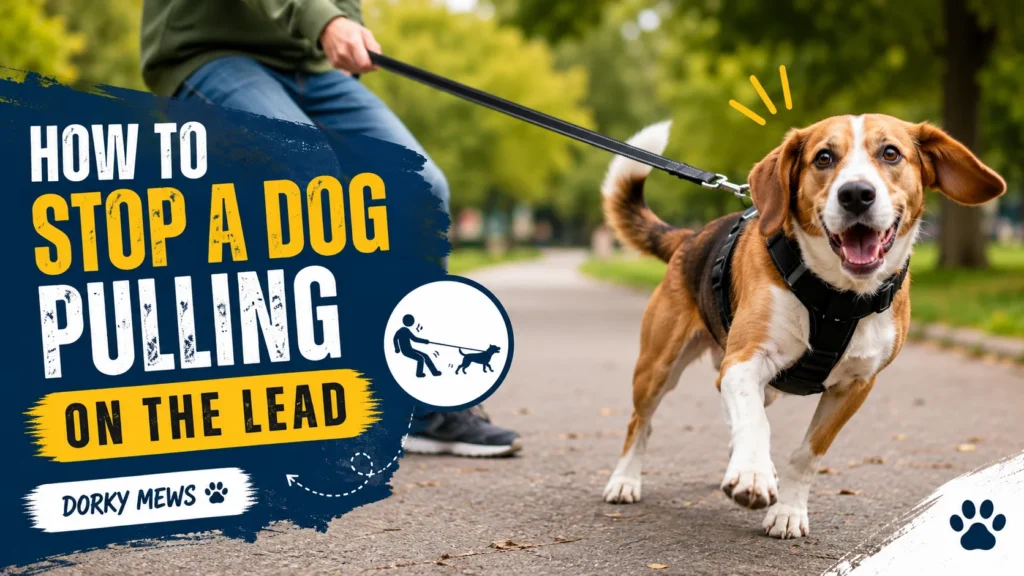
A well-fitted front-clip harness can make a real practical difference while you’re training. Unlike a back-clip harness (which can actually make pulling easier and more comfortable for a dog, similar to a sled dog’s rig), a front-clip design redirects a pulling dog gently sideways rather than letting them drive forward with full force. This takes some of the physical strain off your arm and shoulder while you work on the underlying behaviour.
It’s important to see this as a management tool, though, not a solution. A harness reduces the symptoms of pulling — the physical strain and momentum — but it doesn’t teach your dog that pulling doesn’t pay off. Without the training described above, most dogs will simply pull against whatever equipment they’re wearing. Combining the right gear with consistent training gets you the best of both worlds: manageable walks now, and a dog that walks nicely on a loose lead long-term.
Putting It Together
If you’re starting from scratch, a simple approach looks like this:
- Fit your dog with a comfortable front-clip harness for extra control during training.
- Head out for short walks and use “be a tree” every time the lead tightens.
- Reward your dog generously and often for walking in position beside you, not just for returning to you.
- Be patient — early sessions will be stop-start, but stick with it every single walk.
- Gradually reduce how often you reward as loose-lead walking becomes the norm.
Pulling is frustrating, but it’s also one of the more straightforward behaviours to change with the right, consistent approach. Stick with it, and walks should get calmer — and considerably easier on your shoulder — within a matter of weeks.
Key takeaways
- Pulling is learned, not defiance. Dogs pull because it's usually worked before — it gets them to interesting smells, dogs, and sights faster — so the behaviour keeps getting reinforced.
- "Be a tree" is the core technique. Stop the instant the lead goes tight; only move again once it's loose. It's slow initially, but consistency is what makes it stick.
- Reward the position, not just the return. Frequently reward your dog for walking near you with a loose lead, rather than only rewarding once they've come back after pulling.
- A front-clip harness helps, but isn't a fix. It reduces pulling force and physical strain while you train, but doesn't teach your dog anything on its own — training is still essential.
- Consistency matters more than speed. Allowing pulling to work even occasionally undermines the lesson; most dogs improve noticeably within two to four weeks of regular, consistent practice.
- Avoid aversive tools. Choke chains and prong collars work through discomfort rather than teaching a new default behaviour, and carry injury risk — reward-based training is safer and more effective long-term.
Frequently asked questions
It varies by dog, but many owners see noticeable improvement within two to four weeks of daily, consistent practice. Dogs with a long history of pulling successfully, or very high-energy breeds, may take longer. What matters most isn't speed but consistency — a few slow, structured walks each day beat one long walk where pulling is occasionally allowed to work.
No. Loose-lead training works at any age. Older dogs may have a longer-established habit to unlearn, so progress can be a little slower, but the same principles apply and are just as effective.
These tools work by making pulling uncomfortable or painful, rather than by teaching your dog that pulling doesn't get results. They can carry a risk of physical injury to the neck and throat, and don't address the underlying motivation to pull. A front-clip harness paired with reward-based training is generally a safer and more effective long-term approach.
The same principles still apply, but excitement-triggered pulling often needs extra distance from the trigger to start with. Practise "be a tree" and reward-based loose-lead walking somewhere calm first, then gradually reintroduce distractions at a distance your dog can still succeed at.
Some dogs test the boundary before they settle into the new pattern — this is normal and usually passes with repetition. If a dog is genuinely lunging or highly reactive rather than simply pulling toward something interesting, it's worth working with a qualified force-free trainer or behaviourist, since that can indicate underlying anxiety or reactivity that needs a tailored approach.