
Best Pet Birds in the USA: 10 Birds to Consider Before You Buy
Choosing a pet bird is about much more than finding one with beautiful feathers. The best pet birds in the USA depend on your lifestyle, available space, budget and how much time you can spend with a feathered companion. Some birds enjoy learning tricks and interacting with people, while others prefer a quieter routine and plenty of room to explore their surroundings.
Popular choices include budgies, cockatiels, lovebirds, parrotlets and African grey parrots, but each comes with different care requirements. A small bird is not automatically an easy pet, and a clever parrot may need far more attention and enrichment than a first-time owner expects.
In this guide, we’ll explore ten pet birds worth considering, explain their personalities and care needs, and help you decide which might suit your household. Although the focus is on birds commonly kept in the United States, the advice is also useful for UK readers researching responsible bird ownership.
What Makes the Best Pet Birds in the USA?
The right bird is one whose needs you can meet consistently, not simply the one that looks prettiest in a pet shop.
Before choosing a species, consider these five factors:
-
Time and companionship: Some birds need daily interaction and can struggle when left alone for long periods.
-
Noise: Even small parrots can be surprisingly loud, which matters in flats and shared housing.
-
Space: Birds need room to move, stretch their wings and exercise outside the cage in a safe environment.
-
Lifespan: Some species may live for decades, so ownership can be a long-term commitment.
-
Cost and veterinary care: Food, suitable housing, enrichment and specialist avian veterinary care all need to fit your budget.
Birds are intelligent, active animals. They need opportunities to forage, chew suitable materials, bathe where appropriate and engage with their surroundings. A cage should be a safe home base, not a substitute for a stimulating life.
Read also: Complete Pet Bird Care Guide
10 Best Pet Birds in the USA
Here are ten popular choices, from sociable little parrots to impressive, highly intelligent birds. None is completely maintenance-free, so think about the individual bird’s needs as well as the species.
1. Budgerigar (Budgie)

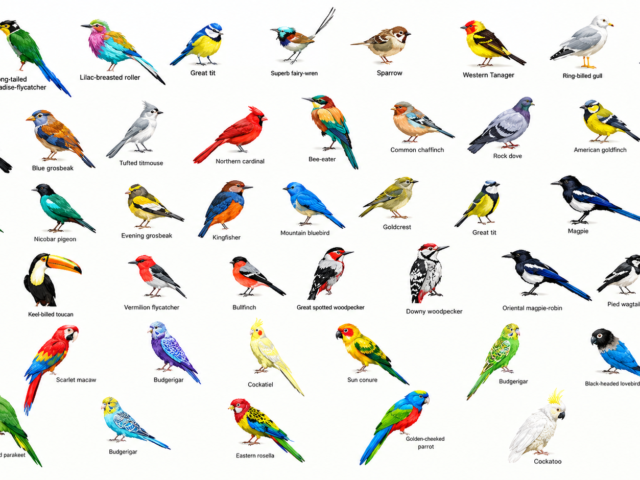
Budgies are small parrots with big personalities. They are curious, playful and capable of learning simple tricks. Some learn to imitate words, although talking ability varies considerably between individuals.
Their smaller size can make them a practical choice for a first-time bird owner, but they still need daily attention, exercise and mental stimulation.
What to know before choosing a budgie:
-
Provide a spacious, safe enclosure and regular opportunities for flight.
-
Offer a balanced diet, including suitable formulated food and vegetables.
-
Supply toys and safe items to chew and explore.
-
Learn to recognise signs of stress and illness.
Budgies are social birds. Depending on their circumstances, a compatible companion may be beneficial, but introductions and housing need careful planning.
2. Cockatiel

Cockatiels are known for their expressive crests, orange cheek patches and whistling. Many enjoy spending time near their owners and can develop strong bonds with familiar people.
They may be a good fit if you want a bird that interacts with you without necessarily needing the complexity of a larger parrot.
However, cockatiels can still be noisy, scatter food and produce feather dust. Their enclosure needs regular cleaning, and they need daily enrichment.
Good to know: A cockatiel that steps onto your hand willingly is showing trust. Let this happen gradually rather than grabbing the bird to make it interact.
3. Green-Cheeked Conure

Green-cheeked conures are lively, inquisitive birds that often enjoy climbing, exploring and learning tricks. Their playful behaviour can be entertaining, especially when they have plenty of suitable toys.
They are small compared with many parrots, but don’t mistake that for a quiet or effortless pet. They can nip, demand attention and make sharp calls.
Consider a conure if you can provide:
-
Daily interaction and positive training
-
Plenty of climbing and foraging opportunities
-
Safe supervised time outside the enclosure
-
Patience with normal parrot behaviours, including chewing
A conure may not suit a household that needs near-silence throughout the day.
4. Lovebird

Lovebirds are compact parrots with bright plumage and plenty of energy. They can be affectionate with familiar people, but some are territorial and may nip if frightened or handled in ways they dislike.
Their name can create the impression that every lovebird needs a mate to be happy. Social needs depend on the individual bird, its history and its environment. A compatible companion may be appropriate, but two birds are not guaranteed to get along.
Lovebirds need a suitably sized enclosure, daily enrichment and patient, respectful handling. They are not decorative ornaments that happen to eat seed; they are busy little parrots with their own opinions.
5. Parrotlet

Best for: Owners interested in a small bird with a confident personality
Parrotlets are tiny parrots that can behave as though they are much larger than they really are. They are intelligent and curious, and some enjoy learning tricks and interacting closely with their carers.
Their size makes them easy to underestimate. Parrotlets can be territorial or nippy, and they still require training, enrichment and room to exercise.
Provide appropriately sized perches and toys, a balanced diet and a calm routine. Supervise interactions with larger birds carefully, as size differences can lead to serious injuries.
6. Canary

If you would rather listen to birdsong than teach a parrot to step onto your hand, a canary may be worth considering.
Canaries are best known for their songs and bright colours. Many are more suited to being observed than frequently handled, so they can be a good option for people who appreciate watching bird behaviour without expecting constant physical interaction.
They need enough space to move and fly, a clean environment, a suitable diet and opportunities for bathing where appropriate.
Remember: Not every canary sings in the same way. Singing varies with factors such as sex, individual temperament and health.
7. Zebra Finch

Zebra finches are small, lively birds that are often kept in compatible pairs or groups. Watching them communicate, move around and interact can be rewarding.
They are generally not the best choice if your main goal is to have a bird perched on your shoulder. Many finches prefer observation rather than frequent handling.
A suitable enclosure should offer ample horizontal flying space, perches and enrichment. If keeping more than one, make sure there is room for each bird to move away from the others and access food and water without competition.
8. Pionus Parrot

Pionus parrots are worth researching if you want a medium-sized parrot and are prepared for the responsibility that comes with one.
They are intelligent birds that need daily enrichment, suitable housing and regular interaction. Individual personalities differ, and no species can guarantee a quiet, cuddly or easy-going companion.
A Pionus may be less suitable for someone who wants a very low-maintenance pet. Before buying, speak to an experienced avian vet or reputable bird rescue about the species’ diet, behaviour, lifespan and housing requirements.
9. African Grey Parrot

African grey parrots are famous for their intelligence and ability to imitate sounds and speech. Their learning abilities are fascinating, but they also make these birds demanding companions.
An African grey needs a rich environment, regular social interaction, foraging opportunities and consistent positive training. Without sufficient stimulation, a bird may develop welfare or behaviour problems.
These parrots can live for decades, making ownership a major long-term commitment. They are generally not the first bird I would recommend to someone who simply wants an easy starter pet.
If you are considering one, research its welfare needs thoroughly and look into responsible adoption as well as reputable breeders. African grey parrots are also affected by international wildlife-trade controls, so lawful origin and documentation matter.
10. Ring-Necked Parakeet

Best for: Owners who have space and time for an active parakeet
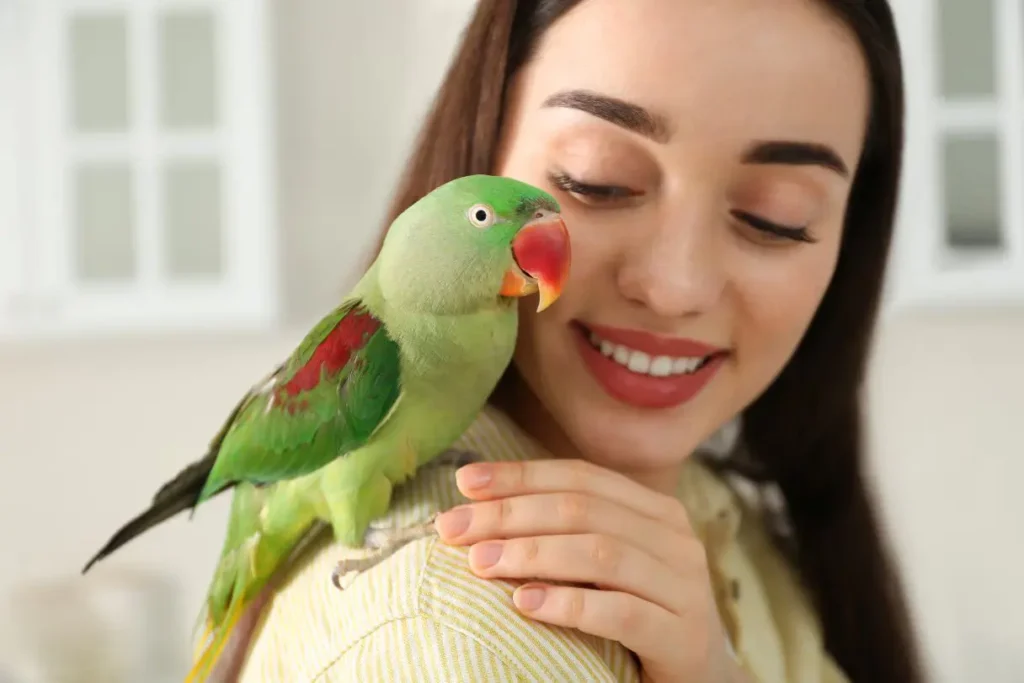
Ring-necked parakeets are striking birds with long tails, bright plumage and a reputation for learning sounds and words. They need space to climb and fly, daily engagement and patient training.
They can be vocal, and some individuals may be wary of hands unless they have been gently socialised. Their long tail also means that their enclosure must allow comfortable movement without feathers constantly rubbing against the bars.
Before choosing one, make sure you can accommodate its activity level and noise. Check any applicable local rules if you intend to keep or move birds across state or national borders.
Quick Comparison: Which Pet Bird Suits You?
The following table is a starting point, not a guarantee of temperament. Individual birds differ, and care requirements depend on the species, health and living environment.
| Bird | Often suits | Main consideration |
|---|---|---|
| Budgie | First-time owners willing to learn | Needs daily enrichment and social contact |
| Cockatiel | People who enjoy interaction and whistling | Can be noisy and produce feather dust |
| Green-cheeked conure | Active owners who enjoy training | May nip and make sharp calls |
| Lovebird | Owners who enjoy lively behaviour | Can be territorial |
| Parrotlet | People who like confident small parrots | Small size doesn’t mean easy handling |
| Canary | Birdsong and observation | Often prefers limited handling |
| Zebra finch | Watching social birds | Needs suitable company and flight space |
| Pionus parrot | People researching medium parrots | Needs enrichment and experienced preparation |
| African grey | Experienced bird keepers | Complex needs and long lifespan |
| Ring-necked parakeet | Owners with space and time | Active, vocal and needs patient training |
How to Choose the Best Pet Birds in the USA for Your Lifestyle
Before choosing a bird, be honest about what everyday life in your home looks like. A bird that suits someone working from home may not suit a household where everyone is out for most of the day.
Step 1: Decide how much interaction you want
Do you want a bird that enjoys training and interacting with you, or would you prefer to watch birds sing and move around an aviary?
-
For interactive companionship, research budgies and cockatiels.
-
For birdsong and observation, consider canaries or zebra finches.
-
For a more demanding parrot experience, research conures, Pionus parrots and African greys carefully.
These are general starting points rather than guarantees. An individual bird’s history, temperament and needs matter just as much as its species.
Step 2: Prepare a suitable home
Your bird needs a secure, appropriately sized enclosure with room to move, flap its wings and use its perches comfortably. Provide suitable toys, opportunities to forage and safe time outside the enclosure where appropriate.
The RSPCA explains that pet birds need space to fly, suitable environments and protection from hazards. It also advises against keeping incompatible birds together.
-
A suitable cage or aviary
-
Species-appropriate perches
-
Food and water containers
-
A balanced diet
-
Safe toys and enrichment
-
A quiet place to rest
-
An avian vet’s contact details
Step 3: Understand feeding requirements
A seed-only diet is not automatically suitable for every pet bird. Depending on the species, a balanced diet may include formulated pellets, vegetables and other appropriate foods.
Ask an avian vet for species-specific feeding guidance. Avoid making sudden dietary changes, and never assume a food is safe simply because it is natural.
Fresh, clean water should always be available.
Step 4: Find a reputable source
Consider adopting from a reputable bird rescue or purchasing from a responsible breeder. Ask about the bird’s age, health history, current diet, behaviour and previous housing.
Look for a bird that appears alert and responsive, with clean feathers and no obvious signs of illness. A visual check cannot guarantee good health, so arrange an appropriate veterinary examination.
Be cautious of sellers who cannot explain the bird’s background or pressure you into an immediate purchase.
Common Mistakes to Avoid When Keeping Pet Birds
Even enthusiastic owners can overlook a few important details.
Choosing by colour alone: A beautiful bird may have needs that don’t fit your household.
Buying a small cage: Small birds still need room to move and exercise. Choose housing based on the bird’s needs, not the amount of floor space you happen to have.
Assuming every parrot will talk: Some learn words and sounds, while others never do. Talking should not be the main reason for choosing a bird.
Leaving a bird without enrichment: Birds need opportunities to explore, forage and engage in natural behaviours.
Keeping incompatible birds together: Birds may fight even when they look similar in size. Introductions should be gradual and carefully supervised.
Ignoring household hazards: Smoke, aerosols, strong fumes, unsafe cookware and open windows can put birds at risk. Keep birds away from kitchen fumes and consult an avian vet about bird-safe household practices.
Waiting until a bird looks very ill: Birds may hide signs of illness. Changes in appetite, droppings, breathing, posture or activity warrant veterinary advice.
[Internal link suggestion: Pet Bird Health and Safety Guide]
Important Considerations for UK Pet Owners
Although this article focuses on the best pet birds in the USA, Dorky Mews also serves UK readers. If you live in the UK and are researching American bird species, check the practical details before buying or importing one.
-
Find an avian vet: Not every veterinary practice has the same level of experience with birds. Identify a suitable practice before you need one.
-
Plan for British weather: Outdoor aviaries must protect birds from cold, wind, rain and sudden temperature changes. Tropical species may need carefully controlled indoor conditions.
-
Check legal requirements: Rules can differ depending on species and circumstances. Some parrots are covered by international wildlife-trade controls, and documentation may be required.
-
Consider noise and neighbours: Bird calls can carry through walls, particularly in flats and terraced houses.
-
Research lifetime costs: Include housing, food, toys, cleaning supplies and veterinary treatment in your budget.
-
Think about holidays: Arrange reliable care from someone who understands your bird’s needs.
If you plan to bring a bird into the United States from another country, check the current requirements with the USDA Animal and Plant Health Inspection Service. Depending on the bird and its origin, import permits, health certificates, inspections or quarantine may apply.
Final Thoughts
The best pet birds in the USA are not necessarily the rarest, biggest or most colourful. They are the birds whose needs match the home and the person caring for them.
For many first-time owners, a budgie or cockatiel is a sensible place to begin researching. Canaries and zebra finches may appeal to people who enjoy observing birds, while larger parrots require particularly careful consideration of their social, behavioural and long-term needs.
Take time to learn about the species, prepare a suitable environment and find a reliable avian vet before bringing a bird home. A well-matched bird can be a fascinating companion, and responsible preparation gives it a much better chance of thriving.
Key takeaways
- - Choose a bird that fits your lifestyle: Consider your time, living space, budget, noise tolerance and experience before choosing a species.
- - Budgies are popular beginner birds: They are small, playful and intelligent, but still need daily attention, exercise and enrichment.
- - Cockatiels make engaging companions: They are known for their expressive crests, whistling and social personalities.
- - Canaries and zebra finches suit bird watchers: They can be rewarding for people who enjoy observing birds rather than handling them frequently.
- - Conures, lovebirds and parrotlets need patient care: These energetic parrots require training, enrichment and appropriate social interaction.
- - Larger parrots require serious commitment: African grey parrots and other larger species can have complex needs and long lifespans.
- - Provide suitable housing: Birds need enough room to move and exercise, safe perches, toys and opportunities to express natural behaviours.
- - Feed a balanced diet: Choose species-appropriate nutrition and consult an avian vet for individual dietary advice.
- - Protect birds from household hazards: Smoke, aerosols, cooking fumes, unsafe cookware and open windows can pose serious risks.
- - Find an avian vet before bringing a bird home: Early preparation helps you respond promptly if your bird becomes unwell.
- - UK owners should check local requirements: Research relevant wildlife-trade rules, documentation and import requirements before buying or moving certain species.
- - The best pet bird is one you can care for responsibly: Match the bird's needs to your home rather than choosing by appearance alone.
Frequently asked questions
Budgies and cockatiels are popular starting points for people who are prepared to learn about bird care. Budgies are small and active, while cockatiels often appeal to people who enjoy interaction and whistling. Neither is maintenance-free, and the best choice depends on your time, space and expectations.
There is no completely easy pet bird. Canaries and finches may suit people who prefer observing birds rather than handling them, while budgies may suit owners who want to build an interactive relationship. Every bird needs appropriate housing, nutrition, enrichment and veterinary care.
Budgies and cockatiels may be worth researching, but available space alone should not determine your choice. Consider noise, daily flight opportunities, enrichment and whether you can provide a safe environment outside the cage.
Budgies, African grey parrots, cockatiels, conures and ring-necked parakeets may learn to imitate words or sounds. Ability varies between individuals, and some birds never talk. Choose a bird for its overall needs rather than its potential vocabulary.
Some compatible species can live socially with suitable space, but not every bird will accept a companion. Introductions should be gradual, and birds may need separate enclosures. The RSPCA provides guidance on housing birds together safely.
Lifespans vary greatly by species, individual health and care. Some small birds may live for several years or longer, while larger parrots can live for decades. Research the expected lifespan of your chosen species before committing.