
Cat Care Basics: A Complete Guide for UK Owners
Whether you’ve just brought home a kitten or you’re years into life with a cat, this guide covers the fundamentals of UK cat care in one place. Cats are wonderfully self-sufficient compared to many pets, but that independence can mask needs that are easy to overlook. Getting the basics right — feeding, hygiene, grooming, enrichment and preventative health — makes a real difference to your cat’s wellbeing and to the years you’ll spend together.
Feeding
Most adult cats do well on two measured meals a day, split between wet and dry food depending on preference. Wet food tends to be higher in moisture, which supports urinary and kidney health, while dry food is convenient and can help with dental wear. Many owners feed a mix of both to get the benefits of each.
Portion size matters more than it might seem. Free-feeding dry food — leaving a bowl out all day — can contribute to weight gain in less active cats, particularly those who are neutered or spend most of their time indoors. Check the feeding guidelines on your cat’s food packaging as a starting point, and adjust based on their body condition rather than sticking rigidly to the guide. Fresh water should always be available, ideally away from the food bowl, as many cats prefer to drink and eat in separate spots.
Kittens, pregnant or nursing cats, and senior cats all have different nutritional needs, so it’s worth choosing a food formulated for their life stage rather than a generic adult formula.
Litter & Hygiene
Good litter tray habits are one of the simplest ways to keep a cat happy and prevent house-soiling problems. Scoop daily and fully change clumping litter every two to three weeks, washing the tray out with mild detergent each time — strong-smelling cleaning products can put cats off using the tray.
The general welfare guideline is one tray per cat, plus one extra. So a single-cat household should ideally have two trays, and a two-cat household three. Trays should be placed in quiet, accessible locations, away from food and water bowls, and not tucked into spaces that feel like a trap (such as a small cupboard with only one entrance).
If you notice sudden changes in litter tray habits — going outside the tray, straining, or visiting more frequently than usual — this can be an early sign of a health issue such as a urinary tract problem, and is worth a vet check.
Grooming
Weekly brushing suits most short-haired breeds and helps reduce loose hair around the home as well as the amount your cat swallows while self-grooming. Long-haired cats often need brushing several times a week to prevent matting, particularly around the belly, armpits and behind the ears where knots form quickly.
Grooming sessions are also a useful opportunity to check your cat over — feeling for lumps, checking ears and eyes for discharge, and looking at teeth and gums. Starting grooming routines early and keeping sessions short and positive makes life much easier as your cat gets older, especially for breeds prone to matting or cats who need extra help keeping clean in later life.
Enrichment
Scratching posts, food puzzles and regular short play sessions matter as much for indoor cats as exercise does for dogs. Scratching is a natural behaviour cats use to maintain their claws and mark territory, so providing sturdy posts or pads in the right places (near where they sleep or enter a room) helps protect your furniture too.
Food puzzles and slow feeders turn mealtime into a bit of mental exercise, which is particularly valuable for indoor-only cats who might otherwise be under-stimulated. A few short bursts of interactive play each day — using a wand toy or something that mimics prey movement — helps burn energy and supports a healthy weight, as well as strengthening the bond between you and your cat.
Vertical space matters too: shelves, cat trees and window perches give cats places to observe their environment from a height, which many find naturally reassuring.
Health Basics
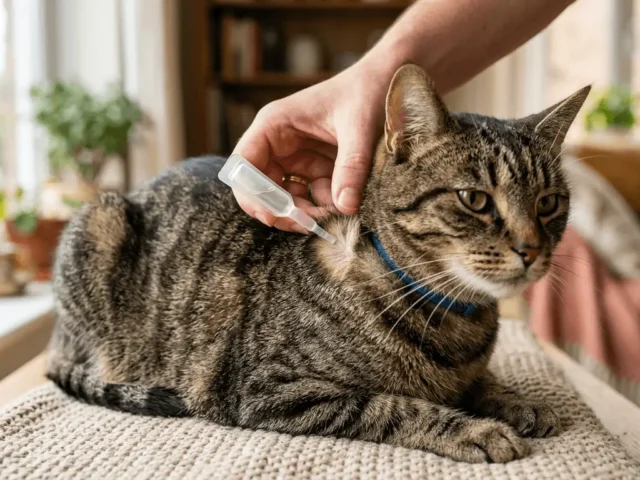
Annual vet check-ups, up-to-date vaccinations and parasite prevention form the backbone of preventative care. Regular check-ups allow your vet to catch developing issues early, when they’re often easier and cheaper to treat, and to keep vaccinations and parasite control (fleas, worms, and ticks) on schedule.
Neutering, microchipping (a legal requirement for cats in England from June 2024) and dental care are also worth discussing at these visits if you haven’t already got them sorted.
For more detailed guidance on vaccinations, parasite prevention, and other preventative health topics, see our Pet Health hub.
Key takeaways
- Feed with structure, not free access. Two measured meals a day (mixing wet and dry as preferred) helps prevent weight gain, especially in less active cats.
- Keep litter trays scrupulously clean. Scoop daily, fully change clumping litter every two to three weeks, and provide one tray per cat plus one extra.
- Match grooming to coat type. Weekly brushing is enough for short-haired cats, but long-haired cats need several sessions a week to prevent matting.
- Enrichment isn't optional for indoor cats. Scratching posts, food puzzles and daily play sessions are essential for physical and mental health.
- Prevention beats treatment. Annual vet check-ups, vaccinations and parasite control catch problems early and keep your cat healthier for longer.
Frequently asked questions
It depends on your cat's weight, age and activity level, but most adult cats do well on two measured meals a day. Use the guidelines on your food packaging as a starting point and adjust based on your cat's body condition, checking with your vet if you're unsure.
Scoop solids and clumps daily, and do a full clean — emptying, washing and refilling with fresh litter — every two to three weeks for clumping litter. Trays that aren't kept clean are a common reason cats stop using them.
Yes, often more. Indoor cats don't get the natural stimulation of exploring outside, so scratching posts, food puzzles, vertical space and daily play sessions are essential for their physical and mental wellbeing.
An annual check-up is the standard recommendation for healthy adult cats, covering vaccinations, parasite prevention and a general health review. Kittens, senior cats and cats with ongoing health conditions usually need more frequent visits.
Yes. Short-haired cats generally only need brushing once a week, while long-haired breeds often need brushing several times a week to stop mats forming, particularly around the belly, armpits and behind the ears.