
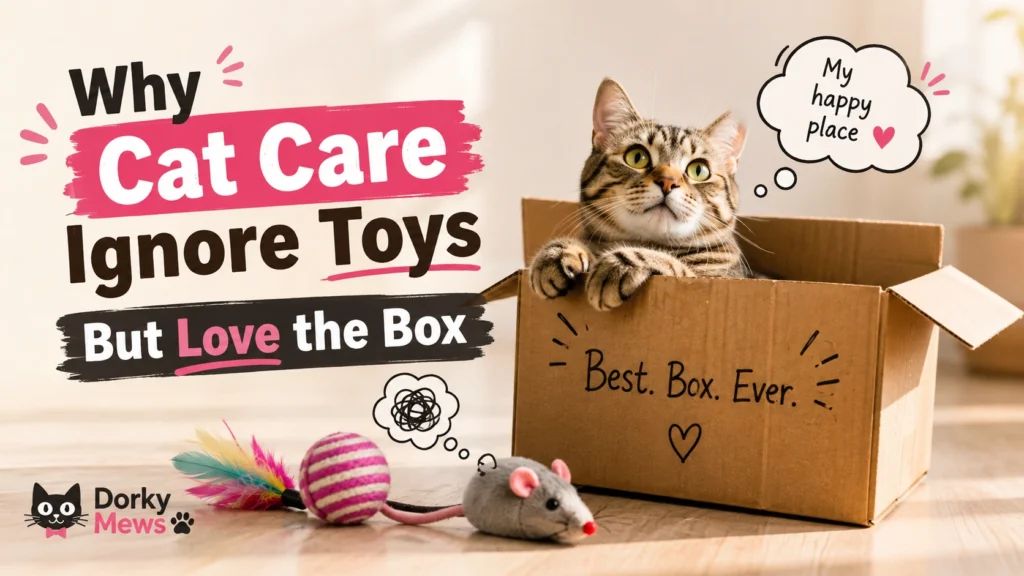
Why Your Cat Care Ignores the £40 Toy and Loves the Box It Came In
You spent twenty minutes on the John Lewis website comparing feather wands. You read reviews. You picked the one with “vet-approved enrichment design” on the box. Your cat care batted it once, then climbed into the box and went to sleep for four hours. This is not a personal failure. This is just cats.
Boredom in cats doesn’t look like a toddler sighing on the sofa. It looks like 3am zoomies, shredded loo roll, a sudden obsession with knocking your glasses off the bedside table, or a cat who’s gone from playful to flat and disinterested in everything. If any of that sounds familiar, the fix probably isn’t a fancier toy — it’s rethinking what “enrichment” actually means.
Cats Care Don’t Want Toys, They Want Jobs
Wild cat care spend a huge chunk of their day hunting, and most of that hunting fails. They stalk, they miss, they try again. Indoor cats get their dinner served in a bowl with zero effort involved, which is convenient for us and mind-numbingly dull for them.
That’s why a scrunched-up bit of paper thrown across the kitchen floor can beat a shop-bought toy — it moves unpredictably, like something alive. The trick isn’t the toy itself, it’s making your cat work a little. Puzzle feeders, treats scattered round the flat, or just hiding kibble in an old egg box can do more for a bored cat than another squeaky mouse gathering dust under the sofa.
The Cardboard Box Isn’t a Joke, It’s Genius Design
People laugh about cats preferring boxes over presents, but there’s real logic in it. Boxes offer something most toys don’t: a hiding spot with visibility out, which taps into a cat’s instinct to watch for threats while feeling safe. It’s low-effort security, and cats are hardwired to value that.
So instead of binning the box your online shop arrived in, cut a couple of holes in it, tuck it near a window, and watch it outperform anything from the pet aisle at Pets at Home.
What People Get Wrong: “Playing With Your Cat Care” Isn’t Enough
Here’s the myth-busting bit. A lot of us think five minutes of wand-waving before bed counts as enrichment. It’s better than nothing, but it’s not the same as environmental enrichment — the stuff that’s there when you’re at work, asleep, or just busy. Scratching posts, window perches, safe access to a garden (if you’ve got one and a secure fence or cat-proofing), and rotating toys weekly so nothing goes stale all matter more than people assume.
If your cat only ever sees the same three toys scattered permanently across the living room floor, they’ve essentially become furniture. Try putting most toys away and rotating two or three back into rotation each week — it costs nothing and genuinely works.
Weather, Flats, and the Great British Indoor Cat Care Problem
A lot of UK cat care are indoor-only, especially in flats or near busy roads, and our grey, wet-half-the-year climate doesn’t exactly encourage outdoor adventures even for cats who do have access. That makes indoor stimulation less of a nice-to-have and more of a necessity. Vertical space helps a surprising amount here — cats that can climb a shelf or cat tree and look down on their surroundings tend to settle better than cats confined to floor level. If you’re in a small flat, going up is often easier than going out.
When It’s More Than Boredom
Sudden changes in behaviour — aggression, over-grooming, hiding constantly, or a complete loss of interest in food or play — aren’t always about enrichment. They can be signs of pain, stress, or an underlying health issue, and that’s a conversation for your vet, not a new toy. If in doubt, get it checked out; better an unnecessary trip than a missed problem.
The Takeaway
You probably don’t need to buy anything. Rotate what you’ve already got, hide a few treats somewhere annoying to find, keep the box, and give your cat care something to climb. Watch what actually gets used for a week — you might be surprised at what wins.
Got a cat care who prefers a Tesco bag to a £40 toy? We want to hear about it — leave a note below and tell us your cat’s weirdest favourite thing.
Key takeaways
- Boredom in cats often looks like bad behaviour — 3am zoomies, shredded loo roll, or sudden disinterest in everything are common signs, not random naughtiness.
- Cats want a "job," not just a toy — puzzle feeders and hidden treats mimic hunting effort far better than a toy that just sits there.
- The box obsession is real science, not a joke — it taps into a cat's instinct for a safe, enclosed spot with a view out.
- Rotate, don't replace — swapping toys in and out weekly beats buying new ones; novelty matters more than variety.
- Vertical space matters more than floor space, especially for UK flat cats without garden access — shelves and perches go a long way.
- Sudden behaviour changes need a vet, not a toy — gradual boredom is normal; sudden shifts in appetite or mood are a different story.
Frequently asked questions
Yes, genuinely. Indoor cats especially can get under-stimulated without regular hunting-style play or environmental changes — it tends to show up as odd behaviour (scratching things they shouldn't, overeating, excessive sleeping, or sudden clinginess) rather than obvious "boredom."
Roughly once a week works well for most cats. Keep two or three toys out at a time and swap the rest into a box out of sight — reintroducing a "forgotten" toy often gets more interest than buying a new one.
Not at all — it's completely normal and tied to their instinct to seek enclosed, safe-feeling spaces with a view out. As long as your cat's eating, moving, and behaving normally otherwise, let them have their box empire.
It doesn't have to be, especially in flats or near busy roads where outdoor access isn't safe anyway. Vertical space (shelves, a cat tree, window perches) and regular play tend to matter more than square footage or outdoor time.
If there's a sudden change — hiding constantly, aggression, over-grooming, or going off food — that's worth a vet check rather than a new toy. Boredom builds gradually; sudden shifts usually point to something else going on.