
Monitoring Your Cat’s Health at Home: A Practical Guide
Cats are notoriously good at hiding illness. As both predator and prey in the wild, they’ve evolved to mask pain and weakness, since any sign of vulnerability could make them a target. This instinct hasn’t disappeared just because your cat spends its life on the sofa — which is exactly why so many feline illnesses go unnoticed until they’re already advanced.
This is part of why owners are often encouraged to know their cat’s normal routine well enough to notice when something changes. You don’t need to be a vet to catch early warning signs. You just need to pay attention, and know what to watch for.
Why “Normal” Matters More Than You’d Think
Every cat has its own baseline: how much it eats, how it uses the litter tray, how playful or affectionate it is, even how it sleeps. A change from that baseline is often the first — and sometimes only — clue that something is wrong. This is why simply knowing your cat well is one of the most powerful diagnostic tools you have at home.
Changes Worth Monitoring
Several everyday behaviors are worth keeping a loose eye on, even when nothing seems obviously wrong:
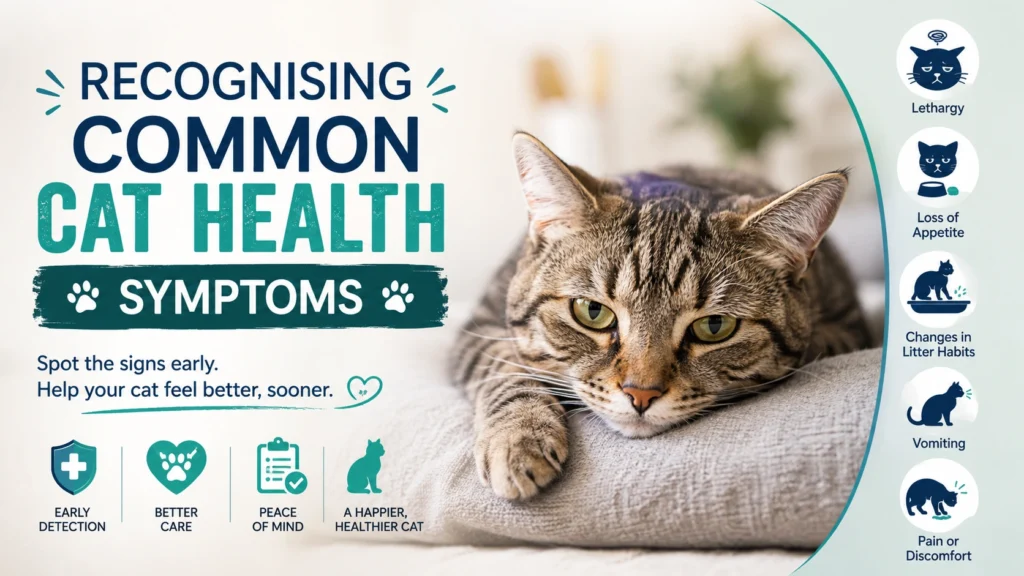
- Reduced appetite — Skipping a meal occasionally isn’t unusual, but a consistent drop in interest in food can signal anything from dental pain to organ issues.
- Increased thirst — Cats that suddenly start drinking noticeably more water may be showing early signs of conditions like kidney disease or diabetes.
- Weight change — Both gradual weight loss and weight gain are worth tracking, since cats can hide surprising amounts of change under a coat of fur.
- Altered litter tray habits — Straining, going more or less frequently, changes in urine or stool consistency, or avoiding the tray altogether can all point to underlying problems.
- Reduced grooming — Cats are fastidious groomers by nature. A scruffy, matted, or greasy-looking coat often means a cat doesn’t feel well enough to keep up with its usual routine.
None of these signs is necessarily an emergency on its own, but together — or if they persist — they’re worth a conversation with your vet.
Signs That Warrant a Same-Day Call
Some symptoms move beyond “keep an eye on it” and into “call now” territory. These include:
- Repeated vomiting — An occasional hairball is normal; vomiting multiple times in a day, or vomiting alongside lethargy, is not.
- Difficulty breathing — Labored, rapid, or open-mouthed breathing in a cat is always considered urgent.
- Straining to urinate without producing urine — This can indicate a urinary blockage, which is a genuine emergency, especially in male cats, and can become life-threatening within hours.
- Sudden collapse — Any sudden loss of coordination, fainting, or inability to stand needs immediate attention.
If any of these occur, contact your vet promptly. Outside of normal opening hours, use an emergency vet service rather than waiting until morning.
Keeping a Simple Health Log
One of the easiest ways to catch changes early — and to communicate them clearly when you do — is to keep a simple health log. This doesn’t need to be elaborate. Noting your cat’s weight, appetite, and any changes once a month or so is often enough to build a useful picture over time.
A basic log might include:
- Monthly weight (a kitchen scale works fine for weighing yourself holding the cat, then subtracting your own weight)
- General appetite (normal, increased, decreased)
- Water intake (normal, increased, decreased)
- Litter tray habits (any changes in frequency or consistency)
- Coat and grooming condition
- Any behavioral changes (energy levels, sociability, sleep)
Having this kind of record makes it much easier to describe a change accurately to your vet, rather than relying on memory during an already stressful visit. It can also help your vet distinguish between a one-off blip and a genuine trend, which often makes the difference between an easy fix and a missed diagnosis.
The Bottom Line
You don’t need to treat every hiccup as a crisis, but building a habit of quiet observation — and writing down what you notice — puts you in a far better position to catch problems early. Given how skilled cats are at concealing illness, that habit may end up being one of the most valuable things you do for your cat’s long-term health.
Key takeaways
- Cats hide illness well — this is instinctive, so subtle behavior changes often matter more than obvious distress.
- Know your cat's baseline — appetite, thirst, weight, litter habits, and grooming are the easiest things to track for change.
- Watch for gradual changes: reduced appetite, increased thirst, weight loss or gain, altered litter tray habits, and reduced grooming are all worth monitoring over time.
- Some symptoms need same-day attention: repeated vomiting, difficulty breathing, straining to urinate without producing urine, or sudden collapse — call your vet promptly, or an emergency vet if it's after hours.
- Keep a simple monthly log of weight, appetite, and any changes — it makes it much easier to give your vet an accurate picture instead of relying on memory.
- Consistency beats intensity — a quick monthly check-in is more useful long-term than occasional close monitoring only when you're already worried.
Frequently asked questions
A quick monthly check-in — noting weight, appetite, and general behavior — is usually enough to catch meaningful changes without becoming excessive. If your cat is older or has a known health condition, more frequent checks may be worthwhile.
Increased thirst on its own isn't necessarily an emergency, but it's a sign worth taking seriously, since it can be an early indicator of conditions like kidney disease or diabetes. It's worth mentioning to your vet, especially if it continues for more than a few days.
Step on a bathroom scale while holding your cat, note the number, then weigh yourself alone and subtract. It's not lab-precise, but it's accurate enough to spot meaningful trends over time.
Occasional vomiting — such as an isolated hairball — isn't unusual. Repeated vomiting within a day, or vomiting combined with lethargy or appetite loss, is different and warrants a same-day call to your vet.
Contact an emergency vet service outside normal opening hours. Symptoms like straining to urinate without producing urine, difficulty breathing, or sudden collapse shouldn't wait until your regular vet reopens.