
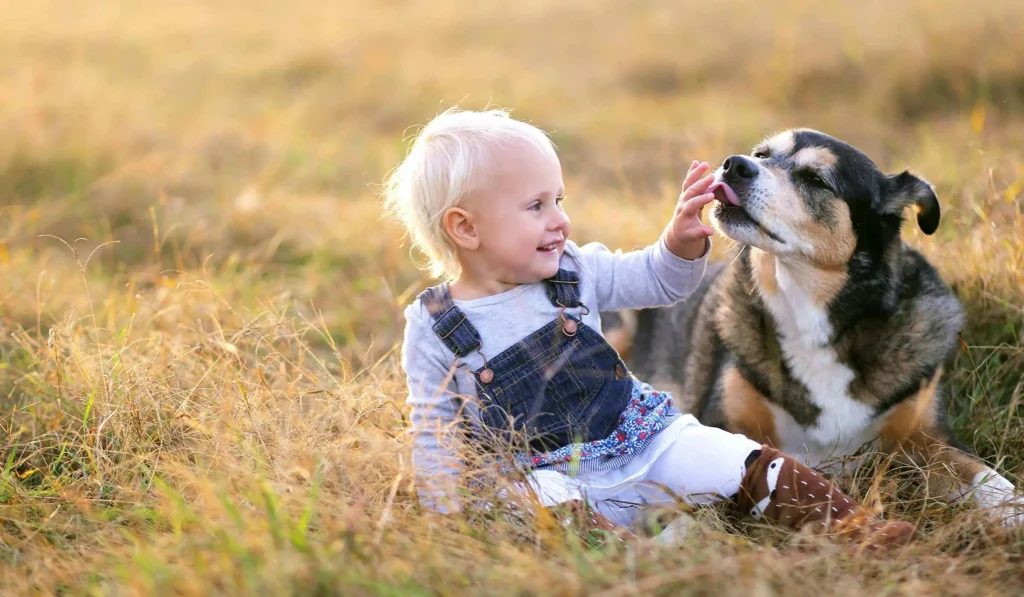
Dogs and Babies: A Practical Guide to Safe and Happy Family Life
Bringing a baby into a home with a dog can be exciting, but it also changes everyday life for everyone — including the dog. Dogs and babies can live happily together, but a safe relationship should never be left to chance. New smells, crying, visitors, changes to walking schedules and less one-to-one attention can all be unfamiliar to a dog. The good news is that preparation can make the transition much smoother. Before the baby arrives, you can introduce your dog to new equipment, sounds and routines. Once your baby is home, careful supervision, sensible boundaries and good hygiene become part of the daily routine. Dogs Trust and the RSPCA both emphasise that babies and dogs should never be left alone together, even when the dog is normally calm and friendly.
Understanding Dogs and Babies
A dog does not automatically understand what a baby is. From your pet’s perspective, a newborn can bring strange noises, unfamiliar smells, sudden movements and a major change to the household routine. Even a dog that has always been gentle may find this adjustment difficult. That does not mean your dog cannot become a wonderful part of family life. It simply means that adults need to manage the situation carefully and give the dog time to adjust.
Why a new baby can be a big change for a dog
Your dog may suddenly experience:
- Different walking times
- Less attention from their usual people
- New furniture and baby equipment
- Crying and unusual household noises
- More visitors
- New smells from nappies, creams and baby products
- Areas of the house becoming restricted
Dogs Trust recommends preparing dogs gradually for these changes rather than waiting until the baby arrives.
Dogs and babies are not able to communicate in the same way
A baby cannot understand when a dog wants space, while a dog cannot understand why a baby suddenly cries or grabs at them. That is why adults must manage interactions rather than expecting the dog or baby to work things out themselves. Learning basic dog body language is useful. Signs that a dog may be uncomfortable can include moving away, becoming tense, avoiding interaction or showing other changes in their normal behaviour. If you are concerned about a particular behaviour, speak to your vet or a suitably qualified behaviour professional rather than trying to diagnose the problem yourself.
How to Prepare Your Dog Before the Baby Arrives
Preparation is easier when it starts well before the birth. You do not need to turn your house into a dog-training boot camp. A few gradual changes can make everyday life much more predictable for your pet.
Introduce baby equipment gradually
Put items such as the pram, cot, changing equipment and playpen in place before the baby arrives. Allow your dog to investigate them calmly. Dogs Trust recommends pairing new experiences with things your dog enjoys, such as treats, play or attention. Avoid forcing your dog towards unfamiliar equipment.
Instead, let them approach at their own pace.
Get your dog used to baby sounds
A baby’s crying can sound very different from anything a dog normally hears. You can gradually introduce recordings of baby sounds at a low volume while your dog is relaxed. If your dog remains comfortable, the volume can slowly be increased over time. If your dog becomes worried, reduce the volume or stop the session and try again more gently later. Dogs Trust specifically recommends gradual exposure rather than overwhelming a dog with loud recordings.
Practise changes to the daily routine
Think honestly about how your dog’s routine may change after the birth.
For example:
- Will walks happen at different times?
- Will someone else sometimes walk the dog?
- Will certain rooms become off-limits?
- Will your dog receive attention at different times?
- Will visitors regularly come to the house?
Make changes gradually where possible.
This gives your dog time to adjust before the baby becomes the centre of attention.
Teach useful everyday skills
Before your baby arrives is a good time to practise behaviours such as:
- Settling on a bed or mat
- Walking calmly beside a pram
- Responding to their name
- Coming when called
- Keeping four paws on the floor
- Moving away when asked
- Relaxing behind a baby gate
These skills can make busy moments much easier.
Dogs Trust recommends teaching dogs to settle independently and becoming comfortable behind a gate or in another safe area.
[Internal link suggestion: Dog Training Guide]
Introducing Your Dog to Your New Baby
The first meeting does not need to be a dramatic moment.
Calm and controlled is usually much more useful than trying to create a perfect photograph for the family group chat.
Before the first introduction
Make sure your dog has had an opportunity to settle. If possible, have another adult available to help. Dogs Trust suggests that when the parent returns home, another person can hold the baby while the parent greets the dog calmly. This can be useful if your dog is likely to become extremely excited when you return.
Let your dog approach calmly
When you are ready for the introduction:
- Keep the environment quiet.
- Hold the baby securely.
- Allow your dog to approach rather than forcing them closer.
- Let them sniff gently if they choose to.
- Reward calm behaviour.
- Watch their body language carefully.
- End the interaction if either the dog or baby becomes unsettled.
Dogs Trust advises allowing the dog to approach and investigate gently while avoiding forced interaction.
There is no requirement for your dog to sniff the baby immediately.
If they would rather keep their distance, that is useful information too.
Never leave dogs and babies alone together
This is the most important rule.
Never leave your baby alone with your dog, even if your dog is normally gentle, friendly and trustworthy.
Dogs Trust and the RSPCA both recommend active supervision. The RSPCA notes that children are particularly vulnerable to dog bites and that family dogs can be involved in bite incidents. Supervision means actively paying attention rather than simply being somewhere in the same house. If you need to leave the room, separate the dog and baby safely.
Dogs and Babies Hygiene: What Parents Should Know
Good hygiene does not mean keeping your dog in a separate part of the house.
Dogs can remain part of family life while sensible hygiene habits reduce avoidable risks.
Wash hands after touching your dog
Handwashing is particularly important before preparing or handling food.
NHS guidance for children advises washing hands after touching pets and before eating, while UK guidance also recommends hand hygiene after contact with animals.
For a household with a baby, make handwashing part of the normal routine after:
- Stroking the dog
- Handling dog food
- Cleaning up dog poo
- Cleaning dog bedding or equipment
- Handling toys that have been outside
- Gardening or outdoor activities involving animal waste
Adults should wash their own hands and help older children develop the same habit.
Keep dog food away from baby food
Dogs and babies should not share food or eating equipment. Keep dog bowls and pet food away from areas where you prepare or serve your baby’s food. NHS guidance recommends keeping pets away from food preparation and eating surfaces. This is particularly important once your baby starts crawling and exploring.
Keep dog poo under control
Pick up dog waste promptly, dispose of it properly and wash your hands afterwards.
Dog faeces can contain bacteria, viruses and parasites, so basic hygiene matters. Dogs Trust also recommends appropriate care and preparation when living with a new baby.
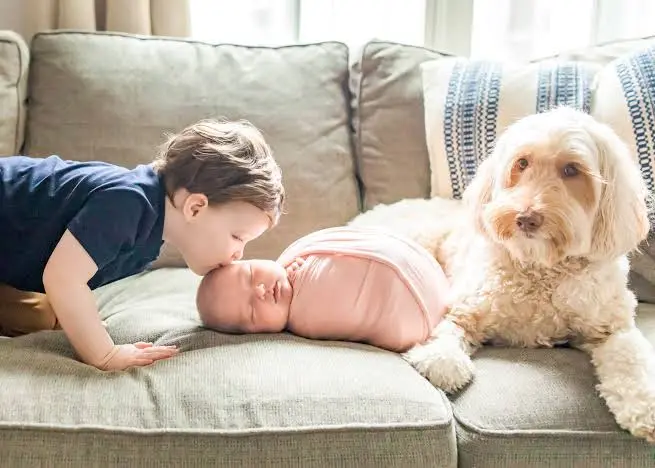
Don’t encourage face licking
It may look adorable when a dog gives a baby a kiss, but allowing pets to lick a baby’s face is not a habit worth encouraging.
Instead, keep interactions calm and supervised.
Keep bedding and feeding areas clean
Regularly clean your dog’s bowls, bedding and living areas according to the manufacturer’s or veterinary guidance.
Good hygiene is about sensible routines rather than trying to make your home completely germ-free.
Practical Safety Tips for Dogs and Babies
Once your baby starts moving, the situation changes again.
A crawling baby can suddenly reach a dog’s bed, food bowl, toys or tail.
Give your dog a safe escape space
Your dog should have somewhere they can retreat without being followed.
This could be:
- A comfortable bed
- A quiet corner
- A crate if your dog is already comfortable using one
- A separate room
- An area behind a baby gate
The important thing is that the space is respected.
Dogs Trust recommends giving dogs somewhere peaceful to retreat and ensuring they are not disturbed while resting.
Keep babies away from dogs while they eat
Food can be valuable to a dog.
Don’t allow a baby or young child to crawl towards a dog while the dog is eating. The same applies when your dog has a high-value chew or favourite toy.
Teach children to give dogs space during meals and rest periods as they become old enough to understand the rule.
Don’t let babies climb on dogs
A baby may eventually try to pull a dog’s ears, grab fur or climb over them.
Even a patient dog can become frightened or uncomfortable.
Always intervene before this happens.
Use baby gates
Baby gates can be extremely useful for managing space without constantly carrying your baby or moving your dog.
They allow your dog to remain part of household life while creating a physical barrier when closer interaction is not appropriate.
Common Mistakes to Avoid
Assuming a friendly dog cannot react
Being friendly does not make a dog incapable of feeling frightened, overwhelmed or uncomfortable.
Treat every interaction individually.
Forcing the dog to accept the baby
Don’t push your dog towards the baby or insist on prolonged sniffing.
Let the relationship develop gradually.
Punishing warning signs
If a dog shows signs that they are uncomfortable, create distance and seek appropriate advice.
Punishing communication can make a situation harder to manage.
Forgetting the dog after the baby arrives
Your dog still needs exercise, enrichment, rest, training and attention.
Ask family or friends for help with walks if your new routine becomes overwhelming.
Dogs Trust recommends maintaining as much of the dog’s normal routine as possible, including exercise, feeding, training and veterinary care.
Allowing toys to become a free-for-all
Baby toys and dog toys should be kept separate.
Dogs may chew objects that aren’t intended for them, while babies naturally explore objects by putting them in their mouths.
Important Considerations for UK Families
Think ahead about crawling
A newborn mostly stays where you put them.
A crawling baby does not.
Before your baby becomes mobile, rethink your dog’s food bowls, bed, toys, chews and favourite resting areas.
Create boundaries before you need them.
Keep your dog’s healthcare up to date
Speak to your vet about routine healthcare, parasite control and anything else your individual dog needs.
If your dog’s behaviour changes noticeably around the pregnancy or after the baby arrives, don’t assume it is simply jealousy or bad behaviour. Dogs Trust recommends speaking to a vet if you are concerned about behaviour, as health issues can sometimes need to be considered.
Get professional help early
If your dog has shown aggression, serious fear, guarding behaviour or other worrying responses around children, seek professional help before allowing close contact.
Your vet can help assess the situation and may recommend an appropriately qualified behaviourist.
Do not wait until your baby is crawling to address a serious concern.
Read Also: Dog Behaviour Guide
Read Also: Puppy Training Guide
Final Thoughts
Living with dogs and babies can work beautifully when the adults take responsibility for managing the relationship. Preparation before the birth, calm introductions, good hygiene and sensible boundaries can make everyday life easier for both your baby and your dog.
The biggest rule is simple: never leave a baby and dog alone together.
Give your dog somewhere peaceful to retreat, keep food and toys appropriately separated, maintain their routine as much as possible and pay attention to changes in behaviour. With patience and sensible management, your dog can remain a happy and valued member of the family while your baby grows up learning to respect animals safely.
Key takeaways
- * 🐶 **Prepare your dog before the baby arrives** by introducing new routines, sounds, smells and baby equipment gradually.
- * 👶 **Never leave a dog and baby alone together**, even if the dog is normally gentle and friendly.
- * 🍼 **Introduce your baby calmly** and allow your dog to approach and sniff only if they are comfortable.
- * 🏠 **Create a safe retreat** where your dog can rest without being disturbed by the baby.
- * 🚪 **Use baby gates** to manage access and create safe spaces for both your baby and dog.
- * 🧼 **Good hygiene matters** — wash hands after touching the dog, its food or poo, and before preparing or handling baby food.
- * 🍖 **Keep babies away from dogs while they eat or have valuable toys/chews**, as dogs may become protective of resources.
- * ❤️ **Respect your dog's boundaries** and never force interaction or punish warning signs such as growling.
- * 👩⚕️ **Seek veterinary or qualified behaviour advice** if your dog shows fear, aggression, guarding or other concerning behaviour.
- * 🌟 With **preparation, supervision, hygiene and patience**, dogs and babies can share a safe and happy family home.
Frequently asked questions
Dogs and babies can live safely together when adults manage their interactions carefully. However, a baby should never be left alone with a dog, regardless of how familiar or friendly the dog is.
Your dog can be allowed to investigate the baby's scent calmly if the situation is safe and the dog is relaxed. Don't force the interaction. Allowing the dog to approach at their own pace can make the introduction less stressful.
Yes, provided an adult is actively supervising and the dog has a safe way to move away. If you cannot give the situation your full attention, separate the dog and baby using a suitable barrier or another safe arrangement.
Start before the birth. Gradually introduce baby equipment, sounds and smells, practise calm behaviour and make changes to your dog's routine ahead of time. Reward relaxed behaviour and avoid overwhelming your dog.
Yes. Wash hands after touching the dog, its food or animal waste, particularly before handling food. Keep pet food and bowls away from baby feeding areas, clean pet equipment regularly and dispose of dog waste promptly.
Searches such as dogs and babies Reddit can lead to personal experiences from dog owners and parents. These discussions can be useful for seeing different situations, but they should not replace advice from a vet, qualified behaviourist or established animal-welfare organisation. Individual experiences are not necessarily evidence that a particular approach is safe for every family.