

Dog Neurological Disorders: Understanding Cerebellar Ataxia
When your beloved dog starts struggling to walk, loses balance, or seems unable to control their movements, it can be heartbreaking to watch. Everyday activities that once came naturally, such as walking across the room, exploring the garden, or greeting you at the door, may suddenly become challenging.
One possible reason for these difficulties is cerebellar ataxia, a neurological condition that affects a dog’s balance, coordination, and control of movement.
Although a diagnosis can feel overwhelming, it does not mean your dog can no longer enjoy a happy and meaningful life. With veterinary care, patience, and the right mobility support, many dogs can continue to enjoy their favourite activities and spend precious time with the people who love them.
What Is Cerebellar Ataxia in Dogs?
Cerebellar ataxia is a neurological condition that affects the cerebellum, the part of the brain responsible for coordinating movement, balance, and posture.
When the cerebellum does not function properly, a dog may have difficulty controlling where their legs go or maintaining a steady walking pattern. They might stumble, sway from side to side, take exaggerated steps, or struggle to stand without losing their balance.
Seeing these changes can be worrying, especially when your dog is still alert, affectionate, and eager to be part of everyday family life.
The important thing to remember is that ataxia describes a problem with coordination rather than one specific disease. A veterinarian can help determine the underlying cause and recommend the most appropriate care.
What Causes Cerebellar Ataxia in Dogs?
Cerebellar ataxia can develop for several reasons. Understanding the possible cause helps your veterinarian decide how to manage your dog’s condition.
1. Inherited or Genetic Conditions
Some dogs inherit genetic conditions that affect the development or function of the cerebellum. Depending on the particular condition, signs may appear when a dog is young or develop later in life.
In some inherited conditions, the neurological changes are progressive, meaning coordination may become more difficult over time.
2. Brain Infections or Inflammation
Certain infections and inflammatory conditions can affect the brain, including areas responsible for balance and coordination. The signs and treatment depend on the underlying problem.
Prompt veterinary assessment is important if your dog suddenly develops neurological symptoms or their condition worsens quickly.
3. Tumours and Other Brain Conditions
Tumours and other structural problems affecting the brain may interfere with normal movement and coordination. These conditions can sometimes cause additional symptoms, such as behavioural changes, seizures, or altered awareness.
Your veterinarian may recommend neurological examinations, blood tests, imaging, or other investigations to identify the cause.
4. Other Neurological Problems
Not every dog with an unsteady gait has cerebellar ataxia. Problems affecting the inner ear, spinal cord, nerves, or other parts of the nervous system can produce similar signs.
That is why a professional diagnosis matters. Treatment and mobility recommendations should be based on your dog’s individual needs.
Common Signs of Cerebellar Ataxia in Dogs
The symptoms can vary depending on the cause and severity of the condition. Common signs include:
- Unsteady walking: Your dog may wobble, sway, or stumble while moving.
- Poor balance: Standing still, turning around, or changing direction may become difficult.
- Uncoordinated movements: Your dog may lift their legs unusually high or take awkward, exaggerated steps.
- Difficulty standing: Getting up after resting may require extra effort or assistance.
- Frequent falls: Your dog may lose balance on smooth floors, uneven ground, or during everyday activities.
- Changes in head or body position: Some dogs may develop a head tremor or unusual posture, depending on the underlying condition.
If you notice these signs, arrange a veterinary examination. Sudden loss of coordination, inability to stand, seizures, reduced consciousness, or rapidly worsening symptoms require urgent veterinary attention.
How Can You Help a Dog Living With Cerebellar Ataxia?
A neurological diagnosis can change your dog’s routine, but there are practical ways to make daily life safer and more comfortable.
Create a Safe Home Environment
Start with small adjustments around the house. Add non-slip rugs to slippery floors, keep walkways clear, and provide a comfortable resting area that is easy for your dog to reach.
Avoid stairs and other places where a fall could cause injury. Supervise your dog when they move between rooms or go outside.
These simple changes can help your dog maintain as much independence as their condition allows.
Follow Your Veterinarian’s Advice
Treatment depends on the underlying cause. Some conditions may respond to specific medication or treatment, while inherited or permanent neurological changes may require long-term supportive care.
Your veterinarian may also recommend an appropriate rehabilitation plan, including exercises designed to support safe movement and maintain strength.
Never start supplements, medication, or intensive exercises without professional guidance.
Consider Mobility Support
When balance becomes a daily challenge, the right mobility aid may help your dog move more comfortably.
A supportive wheelchair can provide stability and assistance for dogs whose legs can still move but who struggle to maintain balance or support their body safely.
The goal is not to force your dog to walk beyond their abilities. It is to help them participate in everyday life while protecting their comfort and safety.
Can a Dog Wheelchair Help With Cerebellar Ataxia?
For some dogs, a wheelchair can make movement easier and provide valuable support during supervised walks.
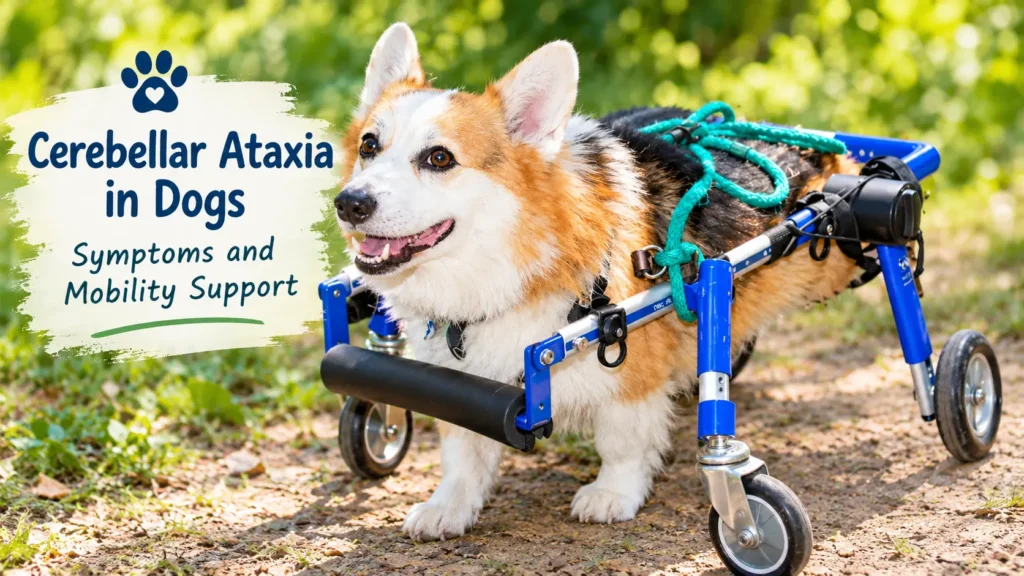
The Walkin’ Wheels Fully Supportive Dog Wheelchair, sometimes called a quad wheelchair, is designed to provide support at both the front and rear of the body.
This type of wheelchair may be worth discussing with your veterinarian or canine rehabilitation professional if your dog has difficulty maintaining balance while walking.
How a Quad Wheelchair May Help
A properly fitted quad wheelchair may help by:
- Providing additional support to the front and rear of the body.
- Reducing the amount of weight your dog must support independently, depending on the setup.
- Helping your dog move during supervised outdoor walks.
- Making it easier for some dogs to participate in suitable daily activities.
- Giving caregivers another option for supporting mobility and quality of life.
You can explore the Walkin’ Wheels dog wheelchair collection to learn more about available designs.
However, a wheelchair is not a cure for cerebellar ataxia. It cannot restore normal neurological function, and it may not be suitable for every dog. The correct fit, level of support, and amount of activity should be determined according to your dog’s condition and professional guidance.
Choosing the Right Wheelchair for Your Dog
Every dog has different mobility needs. Before choosing a wheelchair, consider your dog’s size, weight, ability to move their legs, degree of instability, and overall comfort.
A veterinary professional or qualified rehabilitation specialist can help assess whether a fully supportive wheelchair is appropriate.
It is also important to check the fit regularly. The frame and support system should allow comfortable movement without rubbing the skin, restricting breathing, or placing unnecessary pressure on the body.
Begin with short, supervised sessions and watch for signs of fatigue, discomfort, distress, or skin irritation. Stop using the wheelchair and seek professional advice if problems develop.
The right mobility aid should support your dog’s wellbeing, not create additional challenges.
A Dog Owner’s Experience: Finding Hope Through Mobility Support
For families caring for a dog with cerebellar ataxia, even a small improvement in daily movement can mean a great deal.
One pet owner shared the following experience after using the Walkin’ Wheels quad wheelchair:
“Thank you very much! My dog has cerebellar ataxia, and couldn’t walk because he had so much trouble balancing. The Quad Wheelchair is perfect. Now he is able to walk and do all the things that he did before! The wheelchair rehabilitation in addition to stem cell therapy has improved his health substantially. Now he is happy! The wheelchair quite literally saved his life. I am completely satisfied! Thanks again.”
This testimonial describes one family’s experience. It highlights how meaningful mobility support can feel when a dog struggles with balance and everyday movement.
Every dog is different, and individual results cannot be guaranteed. The reported improvement also involved rehabilitation and stem cell therapy, so it should not be taken as evidence that a wheelchair alone produces the same outcome for other dogs.
Still, stories like this can offer encouragement to families looking for ways to help their pets remain active and involved in daily life.
Final Thoughts
Learning that your dog has cerebellar ataxia can be difficult. Watching a once-confident companion struggle to stand or walk may leave you feeling worried and unsure about what to do next. But your dog is still the same loving companion who looks forward to your attention, enjoys familiar routines, and finds comfort in being close to you. With an accurate veterinary diagnosis, a safe home environment, appropriate rehabilitation, and carefully chosen mobility support, you can help your dog navigate daily challenges with greater comfort and confidence. A wheelchair may be one useful part of that journey for some dogs. Above all, focus on your dog’s individual needs, respect their limits, and work with your veterinary team to make each day as safe, comfortable, and rewarding as possible.
Key takeaways
- - Cerebellar ataxia affects coordination and balance: Dogs may wobble, stumble, fall, or struggle to control their movements.
- - Several conditions can cause ataxia: Possible causes include inherited disorders, brain infections, inflammation, tumours, and other neurological problems.
- - Early veterinary assessment matters: A veterinarian can identify the underlying cause and recommend appropriate treatment or supportive care.
- - Make your home safer: Non-slip flooring, clear walkways, and restricted access to stairs can help reduce the risk of falls.
- - A dog wheelchair may provide support: A fully supportive quad wheelchair, such as the Walkin’ Wheels, may help suitable dogs move more comfortably during supervised activities.
- - Wheelchairs do not cure ataxia: They provide mobility assistance but do not reverse the underlying neurological condition.
- - Every dog needs individual care: Proper wheelchair fitting, rehabilitation, and activity levels should be guided by a veterinarian or qualified canine rehabilitation professional.
- - Quality of life is the priority: With patience, affection, and appropriate support, many dogs with mobility challenges can continue enjoying meaningful time with their families.
Frequently asked questions
Yes, many dogs can continue to enjoy affection, companionship, and suitable activities. Their quality of life depends on the underlying cause, symptom severity, progression, and the care and support available to them.
It depends on the cause. Some underlying conditions may be treatable, while inherited or permanent neurological damage may not be reversible. Your veterinarian can explain the likely outlook for your individual dog.
No. A wheelchair may help selected dogs with mobility and balance difficulties, but suitability depends on their physical abilities, neurological condition, comfort, and support needs. A veterinary or rehabilitation assessment is recommended before use.
No. A wheelchair is a mobility aid, not a cure. It may help a suitable dog move with additional support, but it does not treat the underlying neurological problem.
Use non-slip flooring, keep walkways clear, block access to stairs, provide a comfortable resting area, and supervise movement when needed. Ask your veterinarian about other changes that may suit your dog's specific needs.